
Ceasefire in question as U.S. accuses Iran of violations
The future of the ceasefire between the U.S. and Iran has come into question following the second exchange of fire between the countries in less than a week.
U.S. Central Command described the launch of Iranian ballistic missiles toward Kuwait as an “egregious ceasefire violation,” following the launch of five “one-way attack drones” near the Strait of Hormuz by the Islamic Republic.
CENTCOM says the missiles were “successfully” intercepted by Kuwait and the drones were all intercepted by the U.S. In addition to the five drones, a sixth Iranian drone was launched from a “ground control site in Bandar Abbas.”
The Islamic Revolutionary Guard Corps claims an American base was the intended target in response to the strike near Bandar Abbas.
Saudi Arabia and Qatar released statements Thursday condemning the attempted attacks on Kuwait.
The latest attacks come on the heels of the U.S. and Iran exchanging fire over the weekend, just as the two countries engaged in talks to reach a tentative peace deal.
The Trump administration described the weekend strikes as defensive, targeting Iranian boats that were reportedly laying mines in the Strait of Hormuz. Iran responded by launching missiles towards U.S. aircraft, leading to American forces attacking the launchers.
President Donald Trump continues to reiterate that Iran cannot have a nuclear weapon, demanding the Islamic Republic turn over its enriched uranium, or “nuclear dust” as the president called it.
The president quashed the idea of another country, such as Russia or China, taking possession of the nuclear material.
Trump posted on Truth Social that the material should be “immediately turned over” to the U.S. to be destroyed or to offer an alternative for Iran to destroy it “in place or, at another acceptable location, with the Atomic Energy Commission, or its equivalent, being witness to this process and event.”
While the president is pushing hard for a deal to be made, he maintains that time is on the side of the U.S.
U.S. Secretary of State Marco Rubio warned that it may take several more days to finalize a draft, though he underscored that “it’s either going to be a good deal, or there isn’t going to be one.”
Iran’s supreme leader, Ayatollah Mojtaba Khamenei, who was thought to be seriously injured in the strikes that killed his father, Ayatollah Ali Khamenei, released an statement Monday, bringing any deal between the U.S. and Iran into question.
Khamenei renewed calls for “death to America” and “death to Israel,” saying they will become a “slogan” of the “Islamic nation and the oppressed of the world.”
As of Thursday morning, the White House remained tight-lipped on the status of the ceasefire as the president maintains Iran wants to make a deal.





Mostly Sunny
Latest News Stories

Nessel pushes back as Trump administration extends order keeping coal plant open

Bipartisan praise for federal charges in Minnesota fraud cases

Congress rejects Trump’s proposed NASA budget cuts

Comptroller, Chicago officials debate tax fund sweeps

No public funds for new transit safety group
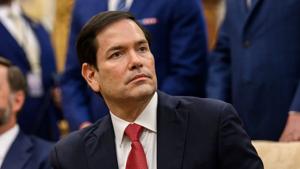
The future of American troops in Europe; Iran lead Rubio’s meeting with NATO

New Lenox Greenlights Early Work Package for Crossroads Fieldhouse Project

Tennessee congressman files articles of impeachment against Roberts

Illinois Quick Hits: Chicagoland chamber opposes ditigal ad tax

Board suspends Camp Mystic co-owner’s nursing license

Illinois bill banning ‘easily convertible’ handguns could pass this session

Deadline approaches for $1 million school choice award

Biometrics privacy law’s territorial reach limited, appeals court says

Watchdog says Biden Education Department defied court order on Title IX enforcement