
Report: Cautionary advice to governments granting overzealous tax breaks
Data centers can produce “tremendous dividends” for both the national economy and local communities, a taxpayer’s group concludes in two new studies.
The centers have caused friction nationwide over concerns that they would strain water and electric power supplies.
The nonprofit National Taxpayers Union has issued two new studies recommending strategies that can help taxpayers.
It cites Loudon County in Virginia as an example.
“Loudoun County, part of Virginia’s Data Center Alley, recently cut taxes in response to the magnitude of the property taxes collected from data centers,” the Taxpayer’s Union study says. “In 2025, 38% of the county’s revenue came from data centers. Projections for 2026 showed data centers would generate over $1.3 billion just in personal property tax on equipment.”
The study cautions, however, against local governments granting overzealous tax cuts in the competition for data centers.
It cites as an example, Abilene, Texas, which approved an 86% property tax break for a data center developer in 2025 and Maysville, Ohio, which approved a 100% tax break for 15 years for a data center.
More recently, there has been a backlash from elected leaders about the generous tax breaks and in some cases, they have even been repealed. Eleven states have approved temporary bans on new data centers.
Florida Gov. Ron DeSantis has been one of the state leaders recently criticizing data centers, saying that although they create local jobs during the construction phase, the number of permanent employees is typically very low.
Even tech companies are getting the message as competition for the “preferred” sites for data centers increase, according to the National Taxpayer’s Union.
As competition for preferred sites increases, some companies have started committing to not taking advantage of certain tax breaks.
“In early 2026, Microsoft announced it was declining tax breaks in St. Joseph County, Indiana, including all property tax abatements,” the Taxpayer Union study said. “This is part of a broader pledge from the company to not seek any utility deals or local tax breaks, though Microsoft leases many facilities instead of building them.”
As the demand for data centers increases, “states and localities may not need to continue offering special tax treatment,” the study concluded.
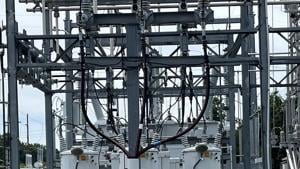
On the issue of data centers draining electric power supplies, the Taxpayer’s Union points to the need to update the nation’s aging power grid.
“Much of the U.S. electrical grid was developed in the 1970s and is approaching or surpassing its intended lifespan,” the study said.
Some data centers developers, however, are planning “behind the meter” power generation that will not rely on the main grid, according to the study.
“These developers may choose to operate natural gas turbines, fuel cells, solar power, or other systems to meet their own needs,” the Taxpayer’s Union said.
Data centers “generate immense heat” and use water for cooling systems.
“Most of the water used onsite evaporates into the atmosphere, while some is reused,” the Taxpayers Union study states.
Power generation also consumes large amounts of water.
However, a single data center uses about the same amount of water in a year as most other industries, the study concludes.
Data center water use in some states with low rainfall such as Arizona, Nevada, and Colorado could be a cause for concern, the study found, but the opportunity for solar power for electricity could be an advantage for those states because it “helps companies like Meta and Google hit their climate targets.”




Sunny
Latest News Stories

Everyday Economics: A stalled labor market and why the next data points matter

Assaults against ICE up 1300%, vehicular attacks up 3200%, death threats up 8000%
Bipartisan bill to cap annual deficits at 3% could curb debt growth

One year in, a ‘ho-hum’ jobs report
Five battleground governor’s races for 2026

Chicago Flips Red calls for audit after public schools report

Capital Imp Committee: Begins Drafting Policy to Regulate Artificial Intelligence in County Government

Public Health Committee Chair Demands Animal Control Agreements for Crete, Monee

Public Works Committee Considers Taking Over Kankakee County Line Road to Expedite Bridge Repairs

Trump signs order protecting Venezuelan oil revenue from legal claims

Retirements and resignations to impact midterms as balance of power at stake
U.S. Supreme Court to hear anti-oil cases with energy costs on the line

Constitutional concerns raised over Illinois’ first civil hate crime case

Peotone Man Charged With Disorderly Conduct, Criminal Damage at New Lenox Target