
GOP oversight report: Democrats created ‘culture of fraud’
After two years of hearings, whistleblower testimony and document reviews, Minnesota House Republicans say they’ve uncovered what they describe as an “unprecedented” pattern of fraud in Minnesota.
The sweeping 84-page oversight report, adopted Wednesday by the Republican-led Minnesota House Fraud Prevention and State Agency Oversight Committee, concludes a two-year investigation into fraud throughout Minnesota’s taxpayer-funded welfare programs.
“The report outlines the ‘anatomy of fraud’ and the failure of the [Gov. Tim] Walz administration to take action,” said Rep. Kristin Robbins, R-Maple Grove, who chaired the now-adjourned committee.
Robbins explained the report is intended to serve as both a record of findings and a warning about how fraud can spread when government fails in oversight.
“We, through the whistleblowers, really did uncover how there had been a cover up,” Robbins told The Center Square in an exclusive interview following the vote. “They weren’t just sort of unaware of the fraud. They were aware of it and actively allowing it to continue or suppressing people who are trying to call it out.”
The report asserts that by 2019, senior officials in the Walz administration were aware of significant fraud risks in child care assistance programs but failed to act, essentially creating a “culture of fraud.”
“The Walz Administration ignored and consciously downplayed shocking levels of fraud across more than a dozen Medicaid waiver programs,” the report states. “Despite having sufficient authority to take action to prevent fraud and the authority to place new controls when necessary, the Walz Administration allowed the fraud explode to unprecedented levels.”
It further claims that whistleblowers who raised concerns were ignored or retaliated against and that oversight warnings from the Office of the Legislative Auditor were not adequately implemented.
“When diligent and courageous government employees reported fraud and tried to get action, the Walz Administration ignored, demoted, and retaliated against whistleblowers,” the report states, adding that those who did speak out were often accused of “being racists.”
“This complicit acceptance of fraud by the Democrat leaders allowed a culture of fraud to take root in Minnesota,” it says.
The committee was created in January 2025 as part of a House power-sharing agreement after the chamber was tied. It was the first oversight committee of its kind in Minnesota legislative history and was tasked with holding hearings on fraud prevention and agency oversight.
In late November, a firestorm erupted in the state following the release of reports alleging that millions of taxpayer dollars had been fraudulently stolen from Minnesota’s welfare system and then sent to the Somali-based terror group Al-Shabaab.The revelations drew national attention to the state, with independent and federal investigators estimating that the potential value of fraud schemes could range between $9 billion and $20 billion.
“The scope of the fraud is staggering,” Robbins said during the committee’s final hearing. “We have made enormous progress in exposing fraud, strengthening internal controls and bringing a culture of accountability to state government, but there is more work to do.”
A central theme of the report is what Republicans call the “anatomy of fraud,” describing a repeatable playbook used by criminals across multiple programs.
The report says fraud typically begins when providers enter programs with “significant federal money, no enrollment caps, and low barriers to entry,” then escalate billing through falsified attendance records, duplicate claims and shell-company arrangements.
“We’ve seen the same pattern over and over and over,” Robbins said. “We have to clamp down on it right away.”
Robbins explained the committee’s hearings revealed that fraud was not isolated to one program or agency but instead spanned multiple systems over many years.
“All of these failures have created opportunities for serial fraudsters to steal billions from Minnesota taxpayers across multiple programs for years,” the report states.
The report also alleges that state agencies relied too heavily on self-attestation rather than documentation and verification, creating what it calls “predictable” vulnerabilities.
“When a program requires little more than an online form to become a provider, with no documentation, pre-approval site visits, capital investment, or infrastructure, fraud flourishes,” the report states.
Much of the committee’s recommendations focus on tightening eligibility standards, increasing oversight authority and modernizing fraud detection tools.
One of the report’s central proposals is the creation of an independent Office of Inspector General within the executive branch with investigative authority to pursue fraud across agencies. Other recommendations include extending the statute of limitations for public program fraud to 10 years and creating criminal penalties for falsifying information submitted to the Office of the Legislative Auditor or state oversight bodies.
The report also calls for mandatory electronic verification systems for attendance-based programs such as child care, autism services, sober homes and non-emergency medical transportation, arguing that paper or attestation-based systems are too easily manipulated.
“Programs billed based on attestation of attendance are magnets for fraudsters,” the report states. “We’ve learned that the ‘anatomy of fraud’ contains many elements, but it starts with the reality that fraud is a crime of opportunity. While criminals are intent on scamming taxpayers, they are only able to do so if the conditions are right.”
The committee also recommends requiring unannounced site visits before providers can enroll in public programs, along with full disclosure of ownership structures and financial capacity reviews.
Another proposal would create automatic “stop-payment” triggers if program spending grows more than 50% year-over-year.
“This trigger, which would immediately stop payment when spending grows by more than 50% of the previous year, would incentivize the oversight taxpayers deserve and expect,” the report says.
Additional recommendations include expanded use of artificial intelligence to detect irregular billing patterns, mandatory reporting from agencies on oversight gaps, and stronger whistleblower tracking systems.
“State agencies should proactively tell legislators where they lack oversight of programs or gaps in statute,” the report states.
Democrat lawmakers on the committee strongly objected to both the report’s conclusions and the process used to adopt it—as well as the existence of the committee itself.
Rep. Dave Pinto, DFL-St. Paul, criticized the timing of the report’s release and said Democrats were not meaningfully involved in drafting it.
“This document came together without any input, any review, anything from three of the eight members of the committee,” Pinto said.
Rep. Emma Greenman, DFL-Minneapolis, said the committee had strayed from its stated purpose.
“This committee is called the Fraud Prevention and Government Oversight Committee, not the make the case and picture what you think the Democratic Party is,” Greenman said.
Republicans, however, defended the report as a necessary record of findings from the committee’s two-year investigation.
Robbins said the goal of the report was to preserve the work of the committee, regardless of which party is in power in Minnesota in the years ahead.
“If this is the only session in the history of the Minnesota Legislature where we actually had the guts to have an oversight committee,” she said, “I want there to be a record of our work.”



Mostly Sunny
Latest News Stories

WATCH: Illinois In Focus Daily | Thursday Aug. 7th, 2025

Indiana Woman Identified as Victim in Fatal Wilmington-Peotone Road Crash

Multiple Agencies Rescue Person in Mental Health Crisis from Frankfort Pond

Green Garden Township Forges Ahead with New Town Hall Plan, Faces Budget and Neighbor Concerns
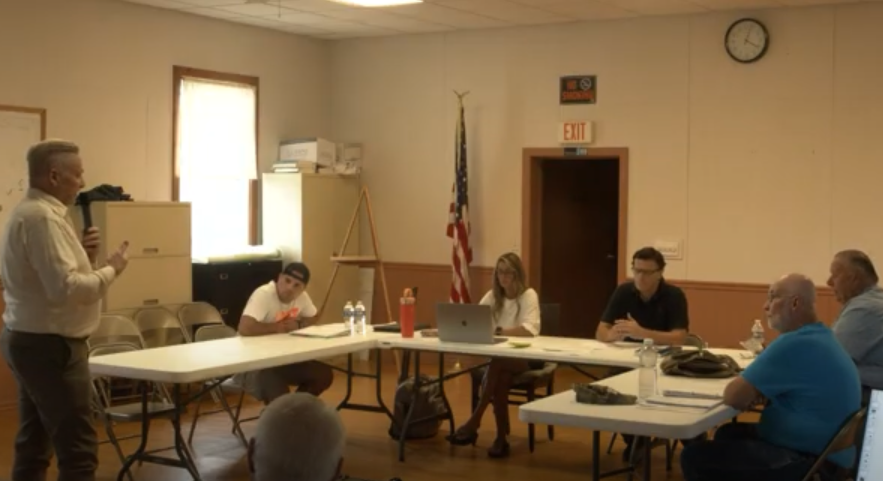
IT Consultant Urges Green Garden Township to Adopt Modern Cybersecurity Measures

Sanchez Family Unveils Major Redevelopment Plan for Monee Industrial Property
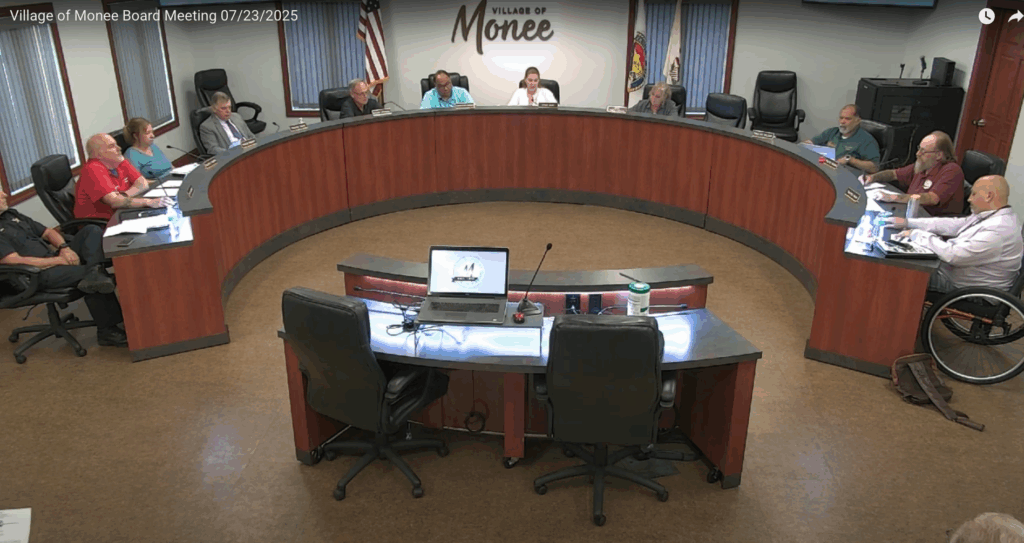
Monee Approves Over $566,000 Payment for New Public Works Facility Nearing Completion
Sheepdog Firearms Gets Green Light for Special Use Permit in Monee

New Lenox Prepares for Grand Opening of Wintrust Crossroads Sports Complex
New Lenox D122 Board Approves Tentative Budget, Sets September Public Hearing

New Lenox Township Food Pantry Reports Record Demand in May

New Lenox to Dedicate Street Honoring Pope Leo XIV, Citing Deep Local Ties
D122 Renews Insurance Policies for Nearly $490,000
New Lenox Township Addresses Cemetery Needs, Appoints New Liaison