US House passes Save Our Shrimpers Act
The U.S. House of Representatives has passed legislation aimed at stopping American taxpayer dollars from helping finance foreign shrimp operations that Gulf Coast lawmakers say have undercut domestic shrimpers for decades.
The Save Our Shrimpers Act, sponsored by U.S. Rep. Troy Nehls, R-Texas, would require U.S. representatives at international financial institutions to oppose financial assistance for projects supporting shrimp farming, shrimp processing or shrimp exports in borrowing countries.
The bill passed the House 391-18, sending the measure to the Senate.
“By passing my bill, we are standing up for American shrimpers who wake up before dawn to help feed our country and the world,” Nehls told The Center Square in a statement. “This is a huge win for our Gulf Coast and coastal communities that depend on shrimping to survive, and I urge the Senate to take up my bill and pass it as soon as possible.”
The legislation targets institutions such as the World Bank and International Monetary Fund, where U.S. officials exercise voting power through executive directors. The Congressional Budget Office said the bill would require those officials to oppose assistance for shrimp-related projects, with the requirement expiring seven years after enactment.
The issue is especially significant in Gulf Coast states including Louisiana, Texas and Alabama, where shrimpers have struggled with low dockside prices, rising fuel and labor costs, and competition from cheaper imported shrimp. Industry groups say imports account for more than 90% of shrimp consumed in the United States, much of it produced through aquaculture in countries such as In
In February 2025, The Center Square reported that nearly half a billion U.S. dollars had gone to shrimp-related projects overseas through international development financing, including projects in countries that compete directly with U.S. shrimpers. One project in India, the largest shrimp supplier to the U.S. market, totaled about $200 million.
Existing federal law already gives U.S. officials some authority to oppose international financial institution assistance for foreign commodity projects. Under 22 U.S.C. § 262h, the Treasury secretary must instruct U.S. executive directors at several international financial institutions to use the U.S. “voice and vote” to oppose assistance for production or extraction of an export commodity if the commodity is in surplus on world markets and if the export would cause substantial injury to U.S. producers.
But that protection is conditional. To block assistance for a foreign shrimp project under current law, federal officials would first have to treat shrimp as a surplus commodity and determine that the exports would substantially injure U.S. producers.
The Save Our Shrimpers Act removes that extra step for shrimp. The bill would create a categorical instruction: U.S. executive directors at international financial institutions must oppose financial assistance for any project supporting shrimp farming, shrimp processing or shrimp exports in a borrowing country.
That distinction makes the bill narrower but stronger than current law. It does not rewrite trade law, impose tariffs or ban shrimp imports. Instead, it targets development financing, ensuring U.S. representatives oppose international loans, grants or other assistance that could expand foreign shrimp production.
The bill has bipartisan support from Gulf Coast and seafood-state lawmakers. Its original cosponsors included U.S. Reps. Clay Higgins, R-La., Troy Carter, D-La., Julia Letlow, R-La., Vicente Gonzalez, D-Texas, and several members from Texas, Florida, Alabama, Mississippi, Georgia and the Carolinas. The House Financial Services Committee reported the bill in March after approving it 42-1.
Tthe legislation was first introduced in the previous Congress and reintroduced in March 2025. Nehls said U.S. officials voted against an international financial institution shrimp aquaculture project for the first time in April 2025, but supporters say the bill is needed to make that posture permanent rather than discretionary.
Shrimp industry advocates have backed the measure as part of a broader push against foreign seafood imports, which they say are produced under looser standards and sold at prices domestic boats cannot match. Separate seafood legislation has focused on import inspections, country-of-origin labeling and food safety.
“Today’s vote is a great moment for the American shrimp industry,” said Blake Price, director of the Southern Shrimp Alliance. “When these multinational producers are held to the same standards as our Mom-and-Pop shrimping businesses, Americans will enjoy more sustainable, fresher, wild-caught shrimp from our highly regulated waters, and our coastal economies will thrive.”
The Save Our Shrimpers Act would not immediately raise shrimp prices or provide direct aid to shrimpers. Its impact would depend on whether international financial institutions are considering future shrimp projects, how often Treasury uses the waiver and whether the Senate takes up the bill.




Mostly Cloudy then Slight Chance Showers And Thunderstorms
Latest News Stories
Will County Eyes Major Overhaul to Consolidate Scattered Government Offices
Sheriff’s Office Reports Crime Down 10%, Cites Body Cam Footage as Main Challenge of Safety Act
Will County Considers Moving Land Use Public Hearings Away from Full Board Meetings
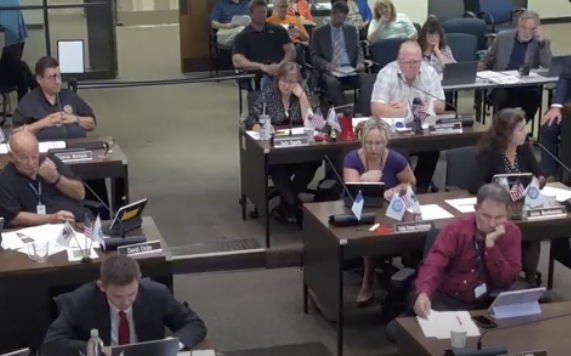
Meeting Summary and Briefs: Will County Board for September 18, 2025
Meeting Summary and Briefs: Lincoln-Way Community High School District 210 Board of Education for September 18, 2025
Lincoln-Way 210 to Launch District Literacy Plan, Expands Community Partnerships
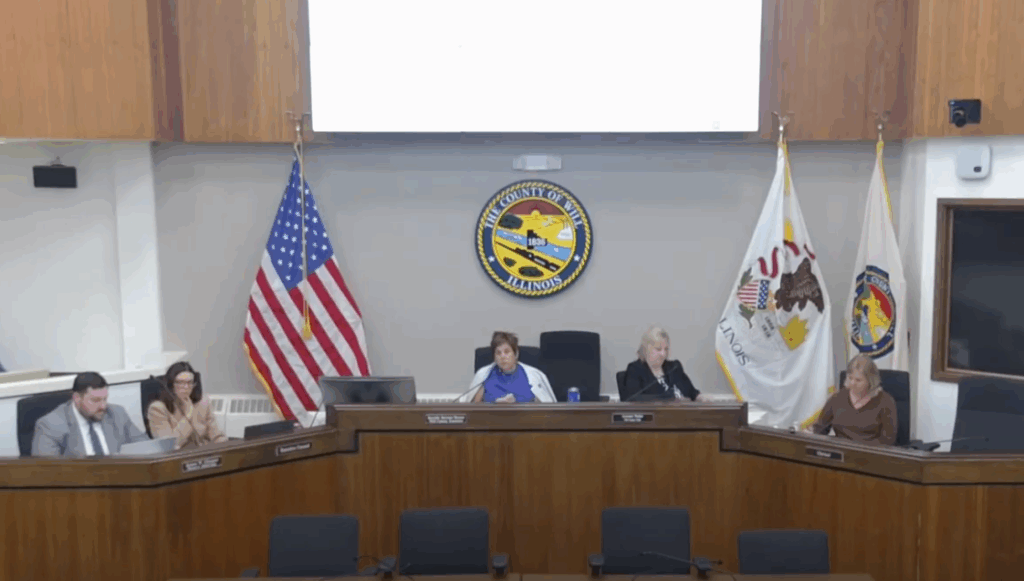
County Board Abates Over $25 Million in Property Taxes for Bond Payments
Lincoln-Way 210 Prepares for “Retirement Wave” with Focus on Recruitment
Meeting Summary and Briefs: Village of New Lenox Board of Trustees for September 22, 2025
Lincoln-Way Board Weighs Community Solar Program Promising $155,000 in Annual Savings
Meeting Summary and Briefs: New Lenox Fire Protection District for August 2025
Meeting Summary and Briefs: New Lenox School District 122 for August 2025
Will County Reverses Zoning on Peotone Farmland to Facilitate 10-Acre Sale
Meeting Summary and Briefs: Joliet Junior College Board of Trustees for September 10, 2025