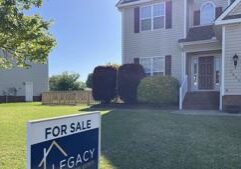
Cook County must pay for taking homes over unpaid property tax: Judge
Cook County could be on the hook for at least tens of millions of dollars, if not more than $100 million, to repay former homeowners whose homes the county unconstitutionally seized and sold to recover unpaid property taxes worth a fraction of the homes’ market values, a federal judge has ruled.
On May 11, U.S. District Judge Matthew F. Kennelly declared Cook County to be liable for potential compensation owed to at least hundreds of people whose homes were auctioned off under Cook County’s so-called tax sale system, even after the U.S. Supreme Court had declared such systems to be unconstutional.
In the ruling, Kennelly said it was obvious Cook County officials knew — or should have known — for years that the county’s tax collection process was unconstitutional and they likely owed tens of thousands of dollars to people whose homes they sold off to satisfy tax debt. And yet, Kennelly said, the evidence shows the county essentially ignored those concerns, and pressed ahead with seizing and auctioning off the homes, unconstitutionally seizing homeowners’ equity in the process.
“… The County continued to conduct tax sales knowing the absence of, and without providing, an adequate means for a property owner to obtain compensation for lost excess equity,” Kennelly wrote in the ruling. “This created an obvious risk that property owners who had their property taken without just compensation would suffer a violation of their constitutional rights.
“By failing to address this issue and consider any possible solution, the County disregarded an obvious need. The Court concludes that the evidence shows the County was deliberately indifferent to the obvious risk of constitutional violations when it failed to act to address property owners’ loss of equity when a tax deed was issued.”
Kennelly’s ruling that Cook County, Illinois’ largest county and one of the most populous counties in the U.S., should be on the hook for a potentially large payout comes about five months since the judge ruled that Cook County’s property tax collection system was unconstitutional.
In that December 2025 ruling, Kennelly determined the county’s “tax sale” system amounts to violations of property owners’ rights to just compensation under the Fifth Amendment and to protection against unjust and excessive fines under the Eighth Amendment.
And Kennelly’s rulings mark yet more wins for a group of plaintiffs and their lawyers, as they continue efforts to force counties in Illinois to adapt their property tax collection processes and rules to comply with a U.S. Supreme Court ruling.
The lawsuit against Cook County was filed in 2022 in Chicago federal court.
A separate action has been lodged against a group of other county governments, including Illinois’ second and third largest counties, DuPage and Lake counties.
And yet another lawsuit is pending in federal court in southern Illinois.
The cases all center on one common accusation: That Illinois and its county governments have all but illegally ignored a recent landmark U.S. Supreme Court decision and continued to seize homes over unpaid property taxes.
In the decision at the heart of the cases, the 2023 ruling known as Hennepin v Tyler, the Supreme Court sided with a homeowner in Hennepin County, Minnesota, whose $40,000 condominium was seized and sold by the county over $2,300 in unpaid property taxes, plus $12,700 in penalties and interest. Hennepin County then kept the surplus from the sale, in a practice dubbed by critics as “home equity theft.”
In a unanimous ruling authored by Chief Justice John Roberts, the court said the county’s tax sale went too far, and the county should only be allowed to collect what is owed, with the homeowner retaining the surplus.
Some justices also said such “equity theft” also amounts to violations on the Eighth Amendment’s ban on “excessive fines.”
In Illinois, homeowners have for decades similarly lost their homes over thousands of dollars in unpaid property taxes under the state’s Property Tax Code tax sale system.
Under the “tax sale” process, the unpaid taxes – known as tax debt – is sold by the county, typically to a real estate investor seeking to profit by either selling the property or keeping it and renting it to others.
Illinois law gives homeowners 30 months to redeem the property by paying off the tax lien. Throughout that redemption process, however, the debt continues to grow through the addition of interest and fees. Ultimately, the investor and county can choose to seize the property, evict the residents and sell the property for full market value, potentially reaping massive profits.
Critics in Illinois have noted this process has typically victimized those least able to absorb such a financial hit, including elderly and black homeowners living in low-income communities.
As of 2026, nearly a full three years since the Supreme Court’s Tyler ruling, Illinois remains the only state in the country to take no action to reform its property tax collection system to come into line with that decision.
Instead, the Illinois Attorney General’s office has argued in court that the fault doesn’t lie with the state law that created the “tax sale” process, but rather with the county governments for refusing to properly pay homeowners the equity they still held in their seized homes.
While Cook County and other county governments have argued the law forces them to conduct unconstitutional tax sales, the state has argued there is nothing in state law that forces the counties to repay taxpayers for their lost equity.
In his ruling, Kennelly agreed with that position, saying Cook County can’t escape liability by essentially arguing that it was only following orders under state law. Since Cook County conducted the tax sales, and should have known it was behaving unconstitutionally, the judge said, the county should be liable for the homeowners’ financial losses.
The judge further rejected Cook County’s argument that such financial liability would be “impractical because the ‘hundreds of millions of dollars’ that it would be required topay would ‘ruin one of the largest counties in the country.'”
The judge, however, called this “a wild overstatement.”
In the decision, Kennelly noted an expert witness for the plaintiffs estimated more than 1,700 homeowners had lost their homes through Cook County tax sales since 2020, losing an average of about $70,000 in equity. When multiplied against each other, those figures could mean Cook County could be on the hook for more than $119 million in lost equity repayments owed under the lawsuit.
However, Kennelly also estimated county’s ongoing liability would amount to about $15 million a year.
He noted Cook County already spent that much in 2025 on one-time payments of $1,000 each “to Cook County residents who are experiencing financial hardship based on property taxes and meet elibility criteria.”
“This action, at a minimum, shows that the County could allocate $15 million in a particular year to address property tax relief without facing financial ruin,” Kennelly wrote.
“It failed to do so.”
Plaintiffs have been represented by attorneys Brian D. Roche, of the firm of Reed Smith, of Chicago; Charles R. Watkins and David Guin, of Guin, Stokes & Evans, of Oak Park; and John Bouman, Lawrence Wood and Daniel Schneider, of Legal Action Chicago.
Watkins and Guin also served as co-counsel in the Tyler case before the U.S. Supreme Court and are co-counsel on the other pending “tax sale” lawsuit against DuPage County, Lake County and six other Illinois counties.





Mostly Sunny then Showers And Thunderstorms Likely
Latest News Stories

Meeting Summary and Briefs: Lincoln-Way Community High School District 210 for April 16, 2026

Supreme Court declines hearing Chicago gun sales case

Meeting Summary and Briefs: Will County Board for April 16, 2026
Illinois Quick Hits: Google settlement wins praise from Illinois AG

Illinois diversity commission says businesses aren’t cooperating
U.S. House, Senate, governor on Ohio primary ballots Tuesday

Mayor Baldermann Blasts State Housing Mandates and Financial Cuts as “Political Pawns”

Lake Central Uses Big Fourth Inning to Hold Off Lincoln-Way Central 3-2
Lincoln-Way Updates Student Handbook, Bans “Smart Glasses” to Combat AI Cheating

Will County Board Approves Tax Abatement Intent for “Project North Winds” Manufacturing Facility

Illinois lawmaker warns medical records bill could delay care

Lincoln-Way West Shuts Out Knights in Conference Matchup