U.S. Senate panel to examine fertilizer costs, food prices
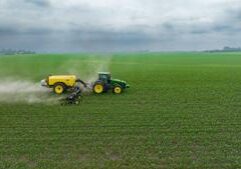
The U.S. Senate Agriculture Committee will hold a hearing on Tuesday afternoon looking at disruptions in the fertilizer industry and the impact rising costs are having on American farmers and food prices.
Senators will examine how global conflicts, supply chain disruptions, fuel prices, and drought conditions are impacting fertilizer supplies and agricultural production during the hearing, titled “Perspectives on the Fertilizer Industry: Ensuring a Stable and Affordable Supply for American Producers.”
The hearing will take place at 3 p.m. in the Dirksen Senate Office Building.
Andy Green, principal and senior adviser at Center Market Strategies; Trent Kubik, president of the South Dakota Corn Growers; Eddie Melton, president of the Kentucky Farm Bureau Federation; Corey Rosenbusch, president and CEO of The Fertilizer Institute; and Joshua Westling, CEO of J. Westling & Co., will testify before the committee.
Nitrogen fertilizer prices have increased more than 30%, while urea prices have risen 47% since late February. Additionally, fuel and fertilizer costs together have risen between 20% and 40%, according to the American Farm Bureau Federation.
“Given the worsening financial conditions on the farm, support is building for additional economic aid for farmers in any upcoming legislation to help offset economic hardships made more challenging by recent increases in fertilizer and fuel prices,” the AFBF report said.
The hearing will likely focus heavily on the impact foreign conflicts are having on fertilizer production and transportation.
Ukrainian drone strikes on Russian oil refineries, pipelines, and fertilizer infrastructure have reduced sulfur and ammonia availability.
The conflict involving Iran has also disrupted fertilizer shipments through the Strait of Hormuz, a major global trade route for fertilizer products.
China has limited exports of nitrogen and phosphate fertilizers to protect domestic agricultural supplies amid global instability.
Senators also likely will discuss drought conditions across parts of the Great Plains. Roughly 90% of Nebraska and Oklahoma are experiencing drought conditions.
Nearly three-quarters of the U.S. cattle herd is facing significant drought conditions, with 48% affected by severe drought, according to the latest U.S. Drought Monitor data. Severe drought conditions will likely make beef more expensive by reducing feed supplies and putting pressure on cattle producers.
“Food affordability is front and center for American families. Global fertilizer markets are under pressure from instability around the Strait of Hormuz, the Russia-Ukraine war, and continued export restrictions in China,” Mike Conaway, former House Agriculture Committee chairman and U.S. Congressman from Texas, said in a statement provided to The Center Square. “These disruptions are driving up costs for key fertilizer inputs like sulfur and ammonia, increasing pressure on farmers and the broader food supply chain. While the United States is better positioned than many countries due to strong domestic production, prolonged global instability will continue to put upward pressure on farm input costs and, ultimately, food affordability for consumers.”




Mostly Sunny
Latest News Stories

AG candidate seeks to reform SAFE-T Act

Supreme Court slaps down energy company suit
Supreme Court appears skeptical of migrant parole case
Poll: 69% nationwide believe data center costs outweigh benefits

Whitney Young Pitching Shuts Down Lincoln-Way Central in 6-0 Defeat

WATCH: Congresswoman Gluesenkamp Perez still mum about WA’s new income tax
Trump bucks New York GOP in 21st congressional district primary race
Op-Ed: Senate Bill 3070 provides sensible solution for students, manufacturers
Supreme Court sides with service member in war zone suit
Illinois millionaire’s tax moves closer to November ballot
Illinois Quick Hits: Pritzker issues order to ban state workers from insider trading
Oldest preserve expansion pushes acreage past 24,000 milestone