U.S. deficit projected to hit $2 trillion, double fiscal target
The federal government is projected to post a $2 trillion deficit in fiscal year 2026, double the 3% of GDP target that has bipartisan support in Congress, according to Treasury’s quarterly refunding documents.
The $2 trillion figure in fiscal year 2026 is up from $1.7 trillion last year. The Office of Management and Budget projects a deficit of $2.065 trillion, primary dealers surveyed by Treasury projected a median of $1.950 trillion and the Congressional Budget Office’s February 2026 baseline projected $1.853 trillion.
Will McBride, the Tax Foundation’s chief economist, said the numbers show Congress isn’t taking action to address financial warnings about the U.S. debt.
“It indicates Congress and the administration are still ignoring the dangers of an unsustainable debt trajectory and actively making it worse rather than addressing it,” McBride told The Center Square. “The effect is to make a crisis more likely to happen sooner rather than later.”
The projections come from Treasury’s quarterly refunding presentation to the Treasury Borrowing Advisory Committee, a panel of bond market participants that advises the department on debt management, making them among the most closely watched fiscal disclosures in financial markets.
A bipartisan resolution pending in Congress, House Resolution 981, would set a fiscal target of reducing the federal deficit to 3% of GDP or less by 2030. The measure has drawn support from both parties, with 18 co-sponsors including Rep. Jodey Arrington, R-Texas, Blue Dog Co-Chairs Jared Golden, D-Maine, and Marie Gluesenkamp Perez, D-Wash., and the resolution’s lead sponsors, Reps. Bill Huizenga, R-Mich., and Scott Peters, D-Calif.
Huizenga said the 3% target remains the right goal despite the widening gap.
“We’ve been on the wrong fiscal path for far too long,” Huizenga told The Center Square. “The point of the resolution is to get Republicans and Democrats – in Congress, across the federal government, and throughout the private sector – to show agreement and rally around 3% as the most practical, immediate target to address the fiscal crisis.”
Arrington, the House Budget Committee chairman, said the nation is “sleepwalking off of a cliff” on its fiscal trajectory.
“The federal deficit has not fallen below 3% of GDP since 2015,” Arrington said. “According to current projections, it will continue to exceed 5% of GDP every year for the next three decades. Throughout our history, deficits this large have only appeared in the shadow of wars and economic collapse.”
Arrington called for “a combination of discretionary spending discipline, pro-growth economic policies and entitlement reform” to address the problem.
The federal government has not recorded a budget surplus since 2001. Since then, spending has outpaced revenues every year, with deficits ballooning during the COVID-19 pandemic. The fiscal year 2025 deficit was $1.7 trillion, roughly 6% of GDP, and the new Treasury projections suggest fiscal year 2026 will be worse. The last time the federal government ran a deficit below the 3% of GDP threshold proposed in HR 981 was 2015, according to the resolution’s own text.
Maya MacGuineas, president of the Committee for a Responsible Federal Budget, said the trajectory is alarming.
“$2 trillion deficits used to be unheard of, and then they only occurred during major recessions – it’s beyond scary that $2 trillion deficits are now the norm,” she said in a statement.
Rep. Scott Peters, D-Calif., said the projections confirm the deficit is heading in the wrong direction.
“Congress needs to change course immediately,” Peters told The Center Square, calling on lawmakers to pass his Fiscal Commission Act, which would appoint a bipartisan panel of Democrats, Republicans and independent experts to recommend changes to both taxes and spending to reduce borrowing.
A recent survey by the Peter G. Peterson Foundation found that 92% of voters – including 89% of Republicans, 92% of independents and 94% of Democrats – are concerned the national debt is driving up their personal cost of living. The foundation’s U.S. Fiscal Confidence Index fell to a 22-month low of 42 in April, reflecting what the organization described as voters’ desire for elected leaders to address the country’s fiscal challenges.
“The rising national debt has effectively become a kitchen table issue for Americans because it contributes to rising costs across the economy, from grocery bills to car payments,” said Michael A. Peterson, CEO of the Peterson Foundation.
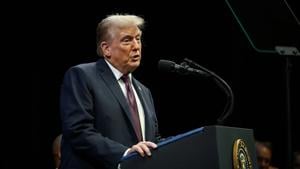
The deficit projections come despite repeated commitments from the administration to address the nation’s fiscal trajectory. In a March 2025 address to Congress, President Donald Trump pledged to balance the federal budget for the first time in 24 years. In his February 2026 State of the Union, Trump attributed a potential balanced budget to fraud elimination, saying his administration could balance the budget overnight if it found enough fraud.
The deficit trajectory is compounding the government’s debt burden. The federal government spent more than $1 trillion servicing its debt in fiscal year 2025, more than it spent on national defense, and that figure is projected to grow. The national debt passed 100% of GDP in March, according to Treasury data. The Government Accountability Office, the nonpartisan research arm of Congress, warned in April that the nation’s fiscal path is “unsustainable” and poses “serious economic, security, and social challenges if not addressed.”
Treasury Secretary Scott Bessent has long acknowledged the deficit problem. Before his confirmation, he publicly championed a “3-3-3” plan that included cutting the budget deficit to 3% of GDP by 2028, and during his January 2025 Senate confirmation hearing testified that federal spending was “out of control.” His most recent congressional testimony, delivered April 22, focused on tax cuts and IRS modernization without addressing the deficit trajectory shown in his department’s own quarterly refunding documents released two weeks later.
In response to a request for comment, Treasury pointed to economic growth projections and a fraud elimination task force announced in March. The GAO has estimated the federal government loses between $233 billion and $521 billion annually to fraud, based on data for fiscal years 2018 through 2022, a fraction of the projected $2 trillion deficit.




Mostly Cloudy then Slight Chance Showers And Thunderstorms
Latest News Stories

Chicago tax proposals draw concern over legality, ‘economic death spiral’

Illinois quick hits: Former governor proposes millionaire’s surcharge; digital state ID launched
U.S. Senate passes bill to release Epstein files, heads to Trump’s desk
Louisiana Rep. Clay Higgins defends Epstein ‘no’ vote
Abbott designates Muslim Brotherhood, CAIR as foreign terrorist organizations

Judge blocks feds from freezing California education funding
Texas appealing El Paso court ruling against new congressional maps
Elections board drops campaign finance fines against IL Senate President

Senate gears up for Epstein vote

Illinois corrections officials say they are on schedule for prison mail scan rule

Asset managers retreat from ESG push, report finds

U.S. House passes bill to release Epstein files, moves to Senate