Virginia 1 of 4 in courtroom battles for congressional redistricting
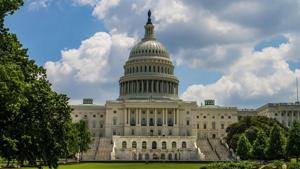
Less than 100 days into Gov. Abigail Spanberger’s administration, Virginia’s redistricting fight is unfolding across multiple fronts, from the ballot box to the Legislature and drawing attention from federal lawmakers.
Virginia voters narrowly approved a constitutional amendment this week that could reshape the state’s congressional map ahead of the November midterms. The pivot could send 10 Democrats and one Republican to the U.S. House of Representatives, whereas today there are six Democrats.
Following the 2024 election cycle, Republicans held a 220-215 majority in the House. One Republican has since gone independent. New redistricting across the country, all since second-term Republican President Donald Trump influenced Texas to redraw in 2025, had forecast a net gain for Republicans of three seats prior to Virginia’s potential flip of four.
And Florida has a special session on the subject next week. The outcome of three states in addition to Virginia are in courtrooms.
Data from the Virginia Public Access Project shows a regional divide in how Virginians voted. Urban areas supported the amendment by about 68.5%, while rural areas opposed it by roughly 71.5%. Suburban and small-city areas were more evenly split, with about 53% voting in favor.
An estimated $111 million was spent on the amendment, according to campaign finance records. Only $29 million of that was in opposition.
In the last redistricting amendment in November 2020, the campaigns of both sides combined for a total of $2.7 million. Democrats had a 235-200 majority in the U.S. House after the 2018 midterms; seven Democrats and four Republicans represented Virginia.
On the Senate floor, Sen. Glen Sturtevant, R-Colonial Heights, criticized the process behind the measure and said the issue is now moving to the courts.
“The people who will have to live under the consequences of this map turned out and fought against it,” Sturtevant said.
He also raised concerns about how the amendment was advanced through a special session, along with questions about timing, notice requirements and ballot language presented to voters.
Spanberger said voters supported the measure and framed it as a response to national political pressure.
“Virginia voters have spoken, and tonight they pushed back,” Spanberger said in a statement following the vote.
The issue is also drawing attention beyond Virginia.
U.S. Rep. Rich McCormick, R-Ga., introduced the “Make D.C. Square Again Act,” which would seek to reverse the 1846 retrocession of Arlington and Alexandria from the District of Columbia back to Virginia.
McCormick said the proposal would restore the original boundaries of Washington, D.C., and said Congress has authority over the federal district. The proposal would require congressional approval.
State and federal proposals show Virginia’s congressional boundaries are part of a broader national discussion.
Candidates are preparing for races tied to congressional districts as election timelines continue to move forward under current law.




Showers And Thunderstorms Likely
Latest News Stories

ELECTION DAY 2025: NYC elects Mamdani, Democrats sweep VA, NJ governors’ races

Madison clerk to use coroner’s death records to fix voter rolls

Trump plans breakfast meeting with all GOP senators

Teacher unions sue to protect student loan forgiveness

WATCH: Trump confident ahead of tariff challenge with other tariffs as Plan B

Illinois quick hits: Raoul touts grand funding injunction; trooper’s vehicle struck

Report: Colorado gains millennials, loses older residents

Workers report benefits of mail scanning at Illinois prisons as state faces rules deadline

Govt shutdown crippling U.S. airports; thousands of flights delayed, cancelled
WATCH: Former DOJ’s seizure of Trump phone records an ‘egregious overreach’

Bessent to attend Supreme Court hearing in tariff challenge

ELECTION DAY 2025: Virginia, NJ governor, NYC mayor, more at stake