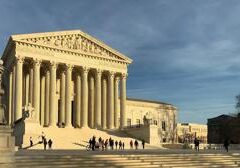
Supreme Court sides with service member in war zone suit
The U.S. Supreme Court, in a 6-3 decision, ruled in favor of an injured service member who sued a military contractor for negligence in a war zone.
The case, Hencley v. Fluor Corporation, focuses on service member Winston Hencley, who was injured in a 2016 suicide bombing in Afghanistan. The bomber was an Afghan worker under the Fluor Corporation, a military contractor.
Hencley argued the Fluor Corporation neglected to uphold its duties by allowing the bomber to be employed by the corporation. Lawyers for the Fluor argued that it could be sued due to its responsibility to the federal government as a military contractor.
The justices rejected the military contractor’s arguments. Justice Clarence Thomas, in the court’s majority opinion, said the Constitution did not support the military contractor’s arguments.
“Although the Constitution gives Congress and the President broad war powers, that assignment has never been understood to bar all war-related tort suits,” Thomas wrote in the court’s majority opinion.
Justices Samuel Alito, Brett Kavanaugh and Chief Justice John Roberts dissented from the majority opinion. The justices argued that state court judges should not be afforded the opportunity to decide litigation against contractors involved in a war zone situation.
“This state-law tort case is preempted by the Constitution’s grant of war powers exclusively to the Federal Government,” Alito wrote in the court’s dissenting opinion.




Sunny
Latest News Stories
New Lenox Mayor Makes Passionate Plea for Civility Following Tragic News

Hegseth promises to fix barracks, but work could take time

‘Long overdue’: Praise for HHS’ action to bar taxpayer-funded sex-change procedures

Gas prices drop, but taxes make Illinois pricier than Midwest neighbors

Liquor License Amendments Approved for Frankfort, Joliet, and Lockport Businesses

Meeting Summary and Briefs: Will County Planning and Zoning Commission for December 16, 2025

Joliet Property Owner Cleared to Convert Non-Conforming Building into Two-Unit Residence

Colorado adopts first-of-its-kind water protections in U.S.
Epstein files redactions frustrate lawmakers

Supreme Court weighs gun owners’ challenge to IL transit carry ban

Nine pharmaceutical companies agree to most-favored-nation pricing

Congress leaves for holidays after zero progress on federal funding