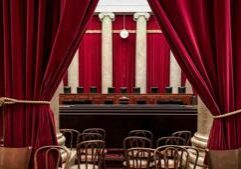
Supreme Court appears skeptical of migrant parole case
The justices of the U.S. Supreme Court appeared skeptical on Wednesday about expanding admissibility standards for immigrants under suspicion of a crime.
The high court justices heard arguments in Blanche v. Lau, a case that focuses on a Chinese national who was convicted of trademark counterfeiting. In 2012, Muk Choi Lau was charged with trademark counterfeiting in New Jersey and fled the country.
When Lau returned, an immigration officer admitted him on parole, due to the pending criminal charge on his record. According to the Immigration and Nationality Act, an immigrant who is admitted on parole must provide clear and convincing evidence they are admissible into the United States.
U.S. Department of Homeland Security officials began removal proceedings for Lau based on his charges. He was eventually convicted of trademark counterfeiting.
The justices debated the meaning of clear and convincing evidence in the immigration statutes and how it would apply to this case.
Justice Samuel Alito posed a hypothetical where an immigrant entering the United States was under suspicion by the French government for killing someone in France. He asked whether the individual could move forward in removal proceedings.
Shay Dvortetzky, a lawyer for Lau, said the immigrant could be admitted into the country, even under that circumstance because there was not a clear conviction that they engaged in the alleged murder.
“The charge does not show that the person has actually committed the offense,” Dvoretzky said.
Chief Justice John Roberts sharply criticized Dvoretsky’s response and said it was “bizarre” that the immigrant would not be detained.
Sopan Joshi, a lawyer arguing for the Trump administration, said a mere charge in a criminal case is enough evidence to suggest the crime was committed and the individual is removable.
“When prosecutors file charges or seek indictments, the prosecutor thinks you did it and can prove to the jury that you did it,” Joshi said.
Dvoretsky warned that a ruling in favor of the Trump administration could expand the government’s authority to parole or detain individuals based on little evidence. He pointed to increased immigration enforcement action over the past year.
Justice Ketanji Brown Jackson appeared to agree with Dvoretsky’s explanation. She said presidential administrations that are more strict on immigration could use a ruling in the case to restrict access.
“You could imagine a world in which a government is not really interested in immigration could use this kind of thing to inappropriately parole people so that it depressed immigration,” Jackson said.
Justice Brett Kavanaugh hit back at Jackson’s assertion, calling it a “conspiracy theory.” He said the court’s decision should not be based on potential outcomes from a presidential administration.
Justice Sonia Sotomayor argued that the government did not have adequate proof to determine that Lau committed the crime.
“You didn’t have proof at the moment that he presented himself that he committed a crime of moral turpitude,” Sotomayor said.
Joshi said uncovering solid proof would require a hearing with an immigration judge, which would not be feasible to conduct at a port of entry.
“The government is not challenging the clear and convincing evidence standard,” Alito said. “The question is whether the government must prove if it took clear and convincing evidence.”
The justices debate privately and vote on a ruling in the case. The high court is expected to release a decision in the case by July.




Showers And Thunderstorms
Latest News Stories

Land Use Committee Advances Mokena Scrap Yard and Homer Glen Landscape Business Over Local Objections
District 210 Reports Insurance Deficit Amid National Healthcare Cost Spikes; Finances Remain Stable

Foxx to face questions about murder conviction review ‘investigations’

Illinois Quick Hits: North Chicago manufacturing expansion announced

Local government advocates oppose Pritzker plan to cut distributions

New Lenox Fire District Exploring Land Swap with Village for New Training Facility
WATCH: Illinois diversity leaders dodge questions as they slip farther from goals

Illinois Quick Hits: Road fund could help renovate Soldier Field

Planning Commission Backs 5-MW Peotone Solar Farm; Developer Pledges Pollinator Habitat and Community Funds

Joliet Junior College Board Approves $2 Tuition Increase Amidst Heated Debate Over Enrollment and Spending
New Lenox District 122 Kicks Off 2026-2027 Budget Cycle, Approves Minor Registration Fee Increase
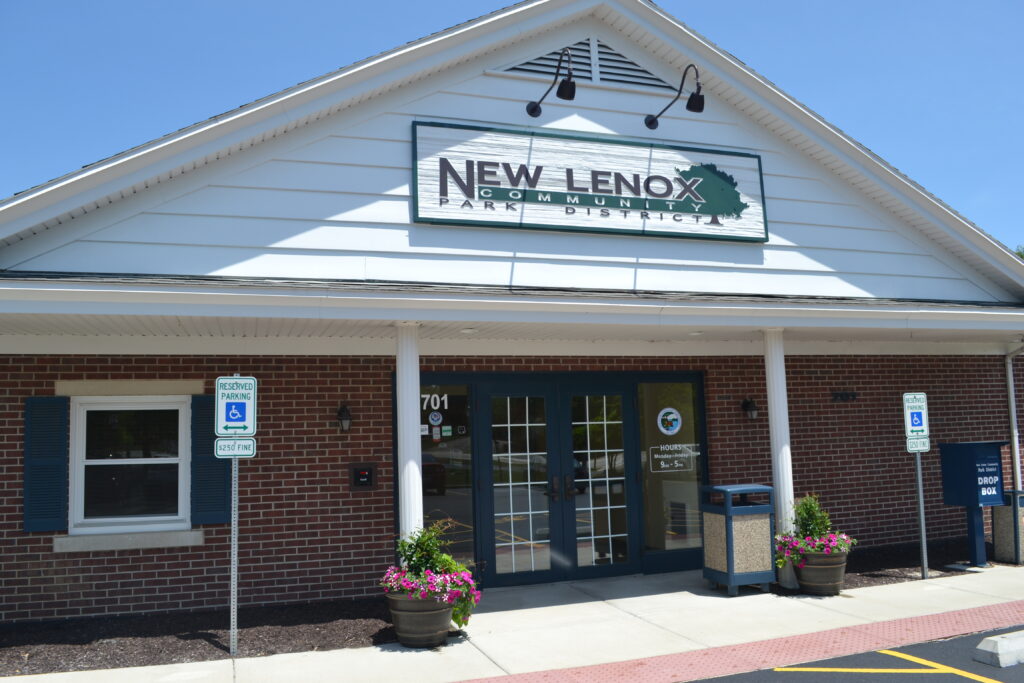
New Lenox Park District Outlines Aggressive 2026 Development Plan, Addresses Crossroads Sinkhole

New Lenox Library Explores Rebranding Ahead of 25th Anniversary on the Commons
Lincoln-Way Board Ratifies Three-Year Support Staff Contract with Significant Hourly Raises