
Minnesota wins legal fight over tuition benefits for illegal immigrants
A federal judge has dismissed a U.S. Department of Justice lawsuit challenging Minnesota’s policy of offering in-state tuition and certain scholarships to students in the country without legal status, allowing the programs to continue.
U.S. District Judge Katherine Menendez ruled the federal government failed to prove Minnesota’s law discriminates against U.S. citizens, rejecting a key argument made by the Trump administration in its legal challenge.
The lawsuit, filed last summer, targeted Minnesota’s Dream Act – a 2013 law that allows students who attended a Minnesota high school for at least three years to qualify for in-state tuition at public colleges, regardless of immigration status.
A 2023 expansion, known as the North Star Promise Act, also allowed for free tuition based on similar criterion.
Federal officials argued the policy violates federal law by offering benefits to immigrants in the country illegally that are not equally available to all U.S. citizens, particularly those who live out of state.
“No state can be allowed to treat Americans like second-class citizens in their own country by offering financial benefits to illegal aliens,” U.S. Attorney General Pam Bondi said last year when the lawsuit was first filed.
Yet, Menendez sided with Minnesota in the order, saying the Justice Department misapplied federal law.
In her ruling, Menendez noted that eligibility for in-state tuition in Minnesota is not based solely on residency, but on whether a student attended a Minnesota high school for a set period of time – a criteria that applies regardless of citizenship status.
Because of that, the ruling found the law does not unlawfully favor illegal immigrant students over U.S. citizens.
Menendez also ruled that the federal government lacked standing to sue Minnesota Gov. Tim Walz and Attorney General Keith Ellison, noting that neither has the authority to unilaterally change state law governing tuition policies.
Ellison praised the decision, calling it a victory for the state.
“Today, we defeated another one of Donald Trump’s efforts to misconstrue federal law to force Minnesota to abandon duly passed state laws and become a colder, less caring state,” Ellison said in a statement.
He argued the policy is a “necessary” investment in Minnesota’s workforce.
The ruling marks a setback for the Trump administration’s broader effort to challenge similar policies nationwide. The Justice Department has filed lawsuits against multiple states over in-state tuition benefits for undocumented students.
So far, outcomes have varied.
In Texas, a federal judge recently struck down a similar policy. Other states have taken different approaches. Florida recently ended in-state tuition eligibility for undocumented students, while more than 20 states and the District of Columbia continue to offer some form of in-state tuition benefits, according to the National Immigration Law Center. At least 14 states, including Minnesota, also allow access to financial aid or scholarships.
The University of Minnesota, the state’s largest public higher education institution, did not respond to a request from The Center Square for comment or provide information on how much funding supports those benefits.


Partly Sunny then Showers And Thunderstorms Likely
Latest News Stories

Meeting Summary and Briefs: New Lenox Community Park District for August 2025

Pavlov Media to Bring New Fiber Internet Option to New Lenox

Will County to Pay Enbridge $82,000 to Relocate Pipeline Equipment for Exchange Street Improvements

Laraway Road Widening Project in New Lenox and Frankfort Gets Additional $468,000 for Redesign

“Federal Policy Uncertainty” Blamed for Delay of Peotone Solar Farm; County Grants Second Extension
Will County Grants Extensions to Five Solar Projects Sold to New Developers
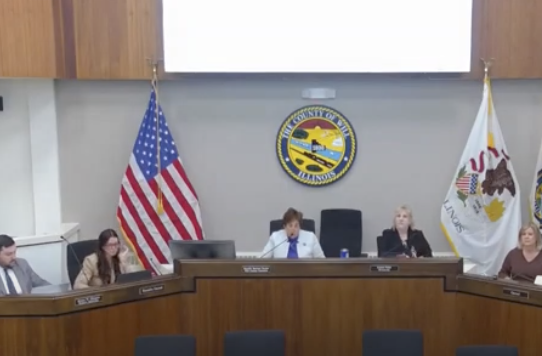
Will County Board Approves Controversial Drug Recovery Retreat in Crete Township
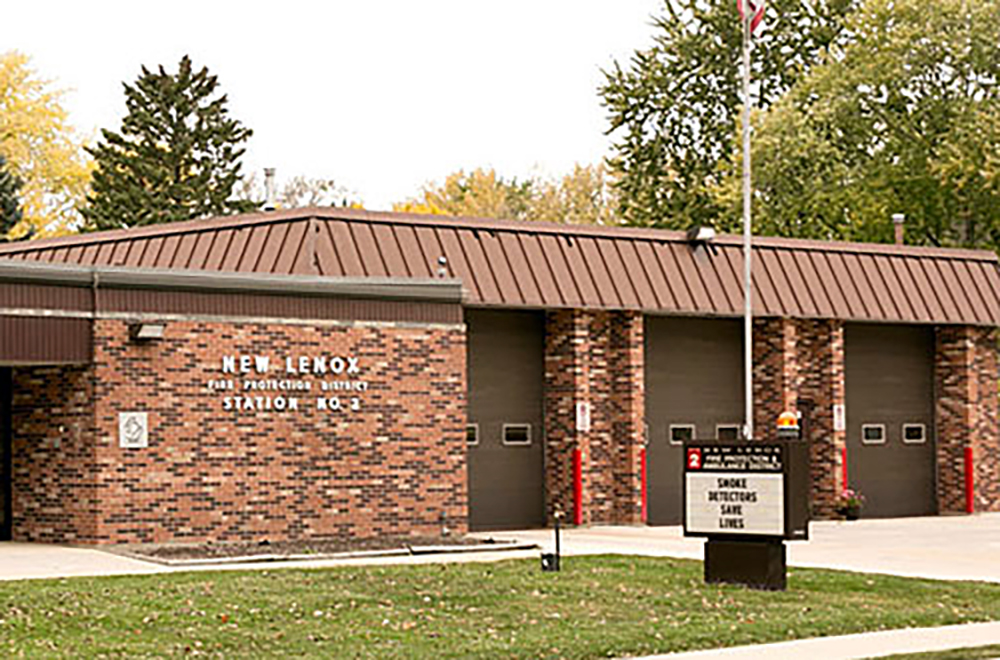
Winter Start Unlikely for $4 Million New Lenox Fire Station 62 Remodel

New LWSRA Sensory Bus Hits the Road Thanks to $30,000 Donation
Joliet Junior College Honors Seven Long-Serving Employees Upon Retirement
New Lenox Parent Challenges Busing Fee, Cites Safety Concerns and Budget Surplus
New Lenox Demands Over $422,000 From Developer to Complete Public Improvements