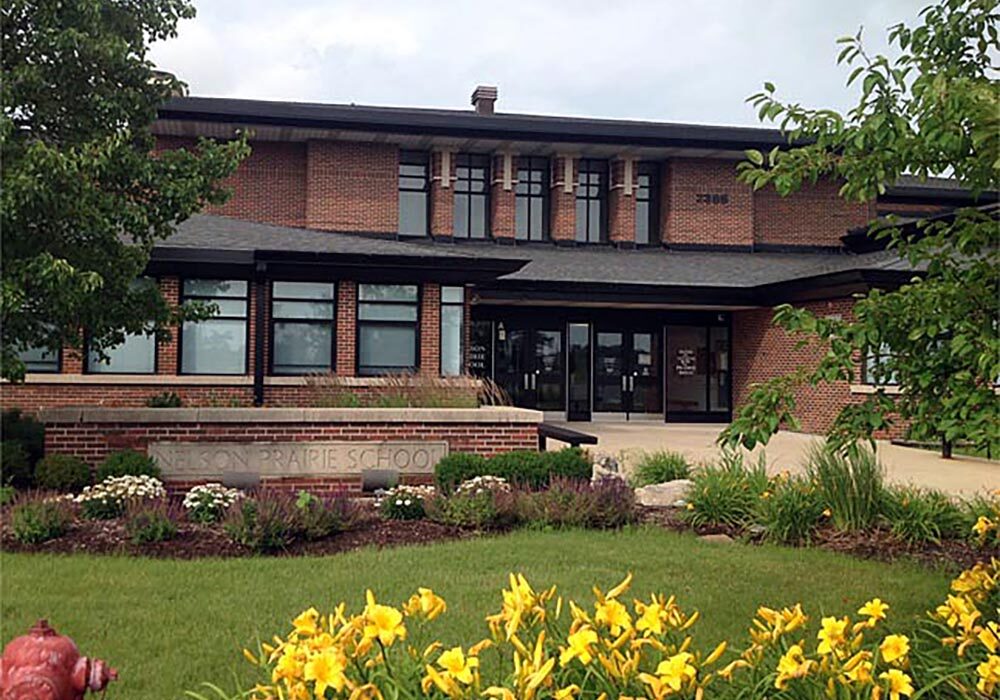
New Lenox 122 Eyes Future Budget Cuts to Offset Full-Day Kindergarten Costs, Approves Quad Plus Tax Abatement
New Lenox School District 122 Meeting | February 17, 2026
Article Summary: District officials presented a five-year financial forecast indicating that rising costs, compounded by the upcoming full-day kindergarten mandate, will require an estimated $1.6 million in budget reductions by Fiscal Year 2032 to maintain target surplus levels.
Financial Outlook and Abatement Key Points:
-
The district projects a $600,000+ budget deficit by FY32 if current expenditure trends continue without intervention.
-
Adding full-day kindergarten will increase annual operating expenses by approximately $2 million starting in FY28.
-
To maintain a target $1 million operating surplus, the district estimates needing $1.6 million in budget reductions by FY32.
-
The Board also approved the fifth and final year of a 50% property tax abatement for the Quad Plus LLC facility.
During its meeting on Tuesday, February 17, 2026, the New Lenox School District 122 Board of Education reviewed a long-term financial forecast that points to necessary budget reductions in the coming years to offset the heavy costs of state mandates and rising personnel expenses.
According to a financial planning memorandum prepared by Chief School Business Official (CSBO) Robert Groos, the district’s annual operating surplus is slowly disappearing because expenditures—primarily driven by staff raises—are increasing faster than revenues. While district revenue is forecasted to increase by about 3.1% per year, personnel raises have historically outpaced that figure.
This trend will be severely exacerbated by the implementation of full-day kindergarten in Fiscal Year 2028, which adds an estimated $2 million in annual operating expenditures.
“These two forces combine to decrease the current annual surplus of about $5M to less than zero (deficit) by FY31,” Groos noted in the financial dashboard. The most recent forecast projects a budget deficit of over $600,000 by FY32.
Because the Board’s financial target parameter requires maintaining at least a $1 million minimum operating surplus, Groos indicated that the Board will need to implement approximately $1.6 million in budget reductions between now and FY32. The administration stated it will work closely with the Board to propose efficiency improvements and cost reductions to prevent a deficit from occurring.
In a separate financial move aimed at regional economic development, the Board unanimously approved a resolution authorizing a partial real estate tax abatement for Quad Plus LLC.
The abatement is the fifth and final year of a previously approved 2019 agreement orchestrated with the Will County Center for Economic Development. Under the agreement, the school district abates 50% of the property taxes on the 52,500-square-foot Quad Plus industrial and warehouse facility located on Lot 5 in the Cherry Hill Business Park. The resolution applies to the 2025 tax year, which is payable in 2026.

Sunny
Latest News Stories

ICE, Florida officers arrest 230, including 150 sex offenders

With shutdown over, fight over Obamacare reform is on
Feds launch initiative to conduct welfare checks on unaccompanied minors

Judge: Biden-era decree deal requires release of 600+ from ICE detention
Illinois quick hits: Chicago treasurer to boycott U.S. securities to protest against Trump; Governor marks opening of new union training center; Illinois farms expected to lose $67.2 million a year
Will County Committee Denies Appeal for Crete Township ‘Tiny Home’ Permit
Darby Farms Residents Raise Concerns Over Detention Pond Maintenance
Illinois quick hits: WARN Act reporting shows 1,600 job losses in October

Pritzker, alders oppose Chicago tax plans, property tax hike could be next

Boeing to pay $36M to family of Indian woman killed in Ethiopia Air crash

WATCH: Lawmakers call out Pritzker for lack of transparency with budget cuts

IL congressman pushes military to accept CLT, experts say it could shape education

Illinois, Chicago residents rank high taxes as state’s top issue