Village Board Grants Rare Building Code Exemption for Residential Deck Railing
New Lenox Village Board of Trustees Meeting | March 9, 2026
Article Summary: Following a permitting error by the Village’s previous building inspector, the New Lenox Board granted a waiver allowing a local homeowner to keep an installed cable deck railing that violated a local anti-climbing ordinance.
Deck Railing Exemption Key Points:
-
Permitting Error: The Village incorrectly issued a building permit for a rear deck railing at 237 Deerfield Court that conflicted with a local code amendment.
-
Safety Debate: Local ordinance prohibits horizontal railings that could create a “ladder effect” for children, though the installed cable railing complies with the International Residential Code.
-
Legislative Review: Mayor Tim Baldermann suggested the Village review its local amendment to see if an exception specifically for flexible cable railings is warranted.
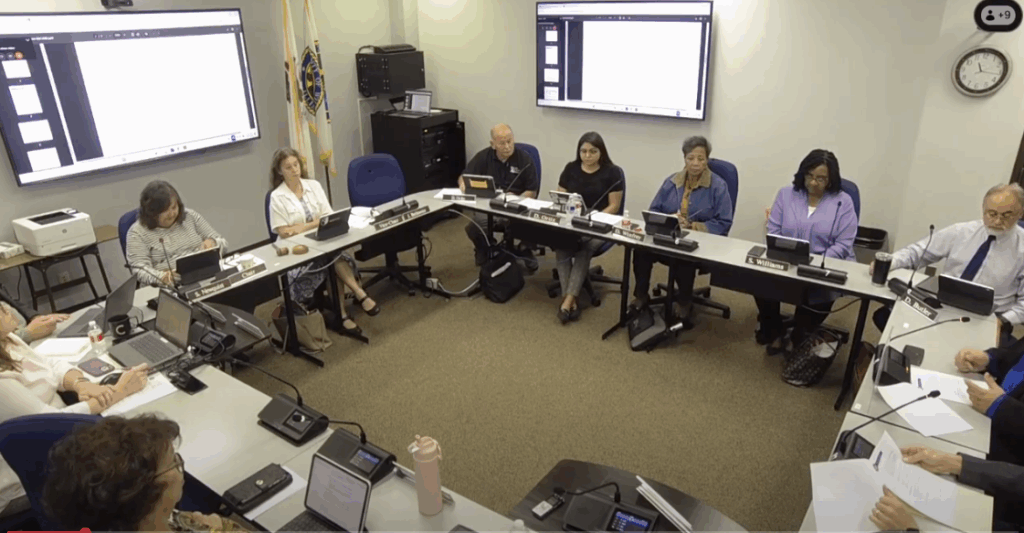
The New Lenox Village Board on Monday, March 9, 2026, unanimously approved a building code waiver for a property at 237 Deerfield Court, resolving a permitting mistake made by a former Village employee while sparking a broader debate over modern residential safety standards.
Community Development Director Robin Ellis reported that the Village’s previous Chief Building Inspector incorrectly issued a permit for a deck project featuring a horizontal cable railing. While the railing complies with the International Residential Code (IRC), it violates a specific local New Lenox amendment prohibiting horizontal railings that could create a climbable “ladder effect.”
The error was not caught until the deck was fully constructed and the homeowner called for a final inspection. Ellis noted that the current Chief Building Inspector recommended granting the waiver so as not to punish the homeowner for the Village’s mistake, but strongly cautioned against amending the code to allow horizontal railings village-wide.
Mayor Tim Baldermann formally apologized to the homeowner and the fence installer, Mike Mitchell, who attended the meeting.
Mitchell argued that the railing should not be considered a safety hazard.
“Cable rail in general had a small living time in the IRC from 2001 to the end of 2001. Then they took it out [of the code’s prohibited list],” Mitchell told the Board. “They realized that cable railing was not climbable… There’s a lot of talk or thought about the fact that you could climb something that’s horizontal, but they found that cable in general is not something that kids climb.”
Mitchell added that the specific railing installed is produced by a publicly traded company and that he has never seen the product rejected by other municipalities in recent years.
Mayor Baldermann noted that if the product is widely sold and approved under international codes, the Village might need to update its archaic local amendments rather than relying on waivers.
“If this is a product that’s sold and put on homes everywhere, we just maybe have not changed our code to meet with that, then that’s a discussion that we’d rather have internally,” Baldermann said. “I just, if it’s unsafe, then I’d rather see the Village try and do something to make the homeowner whole as opposed to have something that’s unsafe.”
Trustee Bryan Reiser agreed that cable railings possess fundamentally different physical properties than rigid wooden or metal horizontal fences.
“The cable railing is much different than a solid horizontal picket,” Reiser said. “The cable railing’s got some movement. It’s tough to try to climb, and I imagine that’s probably why it’s allowed in most codes. I would not recommend changing the ordinance to allowing horizontal, but maybe an exception for cable rail.”
The Board approved the waiver 4-0, allowing the homeowner to keep the deck as built. Baldermann directed staff to bring the current Chief Building Inspector to an upcoming work session to formally review whether the Village should permanently amend the code to exempt cable-style systems.

Partly Sunny then Chance Showers And Thunderstorms
Latest News Stories

Meeting Summary and Briefs: Will County Board Executive Committee for October 9, 2025
Renovations at Veterans Assistance Commission and Court Annex on Track for Winter Completion
Will County Considers First Update to Wastewater Ordinance Since 2016
IDOT Plans to Invest Over $1.3 Billion in Will County Roads Through 2031
Committee Advances 50% Increase in Mental Health Levy on 4-3 Vote
Will County Poised to Launch Major Mental Health Initiative Based on Joliet Program’s Success
Looming State Energy Bill Threatens to Further Limit County Control Over Solar and Wind Projects
Controversial Immigrant Rights Resolution Postponed by Will County Board After Heated Debate
Will County’s Gas-to-Energy Plant Reports Nearly $460,000 Net Loss Amid Operational Setbacks
Will County to Draft First-Ever Policy on Artificial Intelligence Use
Will County Sees 50% Drop in Opioid Deaths, But Alarming Rise in Suicides
Will County Board Backs Effort to Rename ‘Stigmatizing’ Chicago Sanitary and Ship Canal
Access Will County Dial-a-Ride on Track for Full County-Wide Service in 2026
Divided Will County Board Authorizes Condemnation for 143rd Street Widening