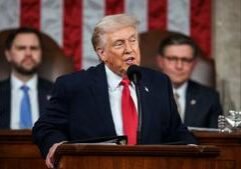
Trump’s tariffs set to rise to 15% for some countries, Greer says
The Trump administration signaled a possible climb in some U.S. tariffs above 10%, but provided few specifics.
Jamieson Greer, the U.S. trade representative, said Wednesday that the 10% tariff on imported goods was likely to increase.
“Right now, we have the 10% tariff. It’ll go up to 15% for some and then it may go higher for others, and I think it will be in line with the types of tariffs we’ve been seeing,” Greer said on Fox Business’ “Mornings with Maria.”
Trump first announced a 10% global tariff hours after the Supreme Court struck down his tariffs under a 1977 law last week. The next day, he said he would raise that global rate to 15%.
The 10% global tariff Trump signed on Friday went into effect at 12:01 a.m. Tuesday. A bulletin from U.S. Customs and Border Protection said that Trump’s executive order imposed an additional 10% ad valorem duty. The duty applies to imported articles of every country for 150 days under Section 122 of the Trade Act of 1974, with exceptions.
Before the Supreme Court’s ruling on Friday, the United Kingdom paid the lowest import duties at 10%. Most other nations faced higher rates, including the European Union, Japan, Indonesia and others.
Greer told Bloomberg TV that the White House was preparing to raise the temporary tariffs to 15% “where appropriate.”
Kevin Hassett, director of the National Economic Council of the United States, told reporters that tariffs would remain a key part of Trump’s economic agenda, even after the ruling.
“The tariffs are not going back to zero,” he said. “That’s not going to happen.”
The Yale Budget Lab found that consumers faced an overall average effective tariff rate of 16% before the Supreme Court ruling. After the ruling, it fell to 9.1%, then climbed back to 13.7% when Trump imposed Section 122 tariffs. The Yale Budget Lab also estimated that the Section 122 tariffs would mean a loss of between $600 and $800 for the average U.S. household.
The Supreme Court, split 6-3, ruled that the International Emergency Economic Powers Act didn’t give Trump expansive tariff powers. Justices Clarence Thomas, Brett Kavanaugh and Samuel Alito dissented.
“The Framers gave ‘Congress alone’ the power to impose tariffs during peacetime,” Chief Justice John Roberts wrote for the majority.



Showers And Thunderstorms
Latest News Stories

Parents could gain access to school discipline evidence under proposed bill
State of the Union highlighted political fracture between Democrats, Trump
Illinois Democrats dispute Trump statements during State of the Union
Illinois Quick Hits: State taxpayers to help restore historic Chicago hotel
Trump moves ahead with tariff plans after Supreme Court ruling

Illinois racial wealth gap among largest in country
Trump to award Medal of Freedom to Michigan native, Olympic goalie Connor Hellebuyck

Supreme Court appears skeptical of Michigan family’s foreclosure case

Judge: Right to sue under IL biometrics law too important to end suit vs Meta
McCuskey leads group fighting to keep natural gas appliances
From Mexico to the northern border, federal agents nab forced labor, visa fraud

Mexican citizens charged with agricultural visa fraud
Dalilah Law a step toward core elements of roadway safety
Celebrating gold, unity: Jewish athletes among those honored at State of the Union