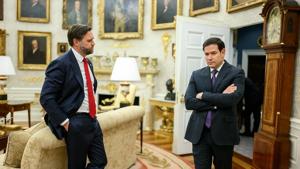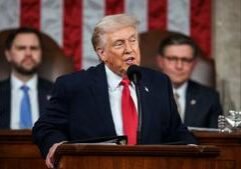
Trump’s tariffs set to rise to 15% for some countries, Greer says
The Trump administration signaled a possible climb in some U.S. tariffs above 10%, but provided few specifics.
Jamieson Greer, the U.S. trade representative, said Wednesday that the 10% tariff on imported goods was likely to increase.
“Right now, we have the 10% tariff. It’ll go up to 15% for some and then it may go higher for others, and I think it will be in line with the types of tariffs we’ve been seeing,” Greer said on Fox Business’ “Mornings with Maria.”
Trump first announced a 10% global tariff hours after the Supreme Court struck down his tariffs under a 1977 law last week. The next day, he said he would raise that global rate to 15%.
The 10% global tariff Trump signed on Friday went into effect at 12:01 a.m. Tuesday. A bulletin from U.S. Customs and Border Protection said that Trump’s executive order imposed an additional 10% ad valorem duty. The duty applies to imported articles of every country for 150 days under Section 122 of the Trade Act of 1974, with exceptions.
Before the Supreme Court’s ruling on Friday, the United Kingdom paid the lowest import duties at 10%. Most other nations faced higher rates, including the European Union, Japan, Indonesia and others.
Greer told Bloomberg TV that the White House was preparing to raise the temporary tariffs to 15% “where appropriate.”
Kevin Hassett, director of the National Economic Council of the United States, told reporters that tariffs would remain a key part of Trump’s economic agenda, even after the ruling.
“The tariffs are not going back to zero,” he said. “That’s not going to happen.”
The Yale Budget Lab found that consumers faced an overall average effective tariff rate of 16% before the Supreme Court ruling. After the ruling, it fell to 9.1%, then climbed back to 13.7% when Trump imposed Section 122 tariffs. The Yale Budget Lab also estimated that the Section 122 tariffs would mean a loss of between $600 and $800 for the average U.S. household.
The Supreme Court, split 6-3, ruled that the International Emergency Economic Powers Act didn’t give Trump expansive tariff powers. Justices Clarence Thomas, Brett Kavanaugh and Samuel Alito dissented.
“The Framers gave ‘Congress alone’ the power to impose tariffs during peacetime,” Chief Justice John Roberts wrote for the majority.




Mostly Sunny then Slight Chance Showers And Thunderstorms
Latest News Stories

Ceasefire remains in effect as U.S., Iran exchange fire
Federal judges temporarily block Alabama redistricting map

Build America 250 Act would help Uber, Lyft with lawsuits
Supreme Court declines hearing Catholic donations case
Investigation: Sanders’ anti-oligarchy tour spent $608k on elite travel
Illinois news in brief: Prosecutors charge man with using care in attempt to kill cops; Military higher education bill goes to governor; Burrito chain closes locations in Chicago area

Lincoln-Way North to Host TV Pilot Filming Under $210,000 Rental Deal
Analysts: Redistricting to cost taxpayers, while slowly shifting election outcomes

Trump honors fallen service members, vows Iran will not obtain nuclear weapon
Stephen Colbert returns to community show after final ‘Late Show’ appearance
TVA reports solid financial results, acknowledges resource plan delays

Illinois dual office holding debate intensifies amid Calumet funding, ethics concerns