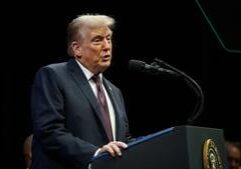
Trump moves ahead with tariff plans after Supreme Court ruling
After the U.S. Supreme Court ruled his tariffs illegal, President Donald Trump vowed to rebuild the protectionist measures and restore some of the highest import duties in nearly a century, using different laws.
The president said he would use alternative laws to reinstate the import duties and maintain previously negotiated trade deals.
“Almost all countries and corporations want to keep the deal that they already made … knowing that the legal power that I, as president, have to make a new deal could be far worse for them, and, therefore, they will continue to work along the same successful path that we had negotiated before the Supreme Court’s unfortunate involvement,” Trump said during his address to Congress on Tuesday.
The largest of those trade deals was with the 27-nation European Union, which said earlier this week it was freezing plans to finalize the pact after the Supreme Court ruling.
Trump said the alternative laws for tariffs are more complex but may be better.
He further stressed that he didn’t need congressional approval for his new tariff regime.
“Congressional action will not be necessary,” he said.
Trump repeated his claim that foreign nations would pay the tariffs, despite economic research indicating Americans bear the cost.
“As time goes by, I believe the tariffs, paid for by foreign countries, will, like in the past, substantially replace the modern-day system of income tax, taking a great financial burden off the people that I love,” he said.
Trump previously promised that tariff revenue would cover $2,000 rebate checks, increased military spending, debt reduction, and other economic goals. But experts say tariff revenue won’t generate enough funds for any of those plans. The new 150-day tariff plan could also face challenges, especially if Congress gets involved.
After the Supreme Court ruled that the president’s tariffs under a 1977 law were illegal, Trump announced a 10% global tariff just hours later on Friday. The following day, Saturday, he posted on social media that he would raise the global rate to 15%.
Despite announcing a future increase, the 10% global tariff signed by Trump on Friday took effect at 12:01 a.m. Tuesday. The Center Square reached out to the White House to clarify when the announced 15% global tariff would be implemented, but did not receive an immediate response.
A bulletin from U.S. Customs and Border Protection said Tuesday that Trump’s latest executive order imposed an additional 10% ad valorem duty. The duty applies to imported articles of every country for 150 days under Section 122 of the Trade Act of 1974.
The Supreme Court, divided 6-3, ruled that the International Emergency Economic Powers Act didn’t give Trump expansive tariff powers. Justices Clarence Thomas, Brett Kavanaugh and Samuel Alito dissented.
“The Framers gave ‘Congress alone’ the power to impose tariffs during peacetime,” Chief Justice John Roberts wrote for the majority.
The Yale Budget Lab estimated Section 122 tariffs could cost the average U.S. household $600 to $800.


Slight Chance Showers And Thunderstorms
Latest News Stories
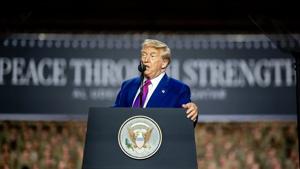
Trump calls for $1.5 trillion military budget despite audit failures
Abbott unloads on CAIR, chastises public schools
Latest Epstein updates: Clintons held in contempt; Maxwell to testify

Illinois Quick Hits: U.S. rep proposes restriction on housing purchases
IL Republicans call for growing tax base, not raising taxes

DHS funding bill teeters as Democrats balk over ICE concerns
House hearing: Fraud goes far beyond Minnesota
Supreme Court hears arguments on Fed firing case
More than 1,000 cases of child care overpayments in Illinois over 5 years

Support for religious freedom up 5 points from 2020, reaching a high of 71
New bill would force DCFS to disclose details on missing children

WATCH: Pritzker says Trump’s first year a failure; Raoul discusses prosecuting fraud