Large taxpayer costs coming to Indiana or Illinois for new Bears stadium
(The Center Square) – Lawmakers in both Indiana and Illinois continue to jockey for position as the Chicago Bears request a large amount of taxpayer funds from each to build a new stadium and development to move from their current home at Soldier Field, where the city of Chicago still owes around $500 million for funding a 2003 renovation.
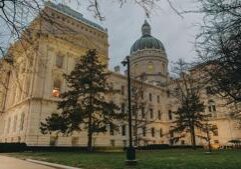
Indiana’s Senate is expected to discuss Senate Bill 27 to fund a stadium in Hammond on Thursday. If approved, that bill would head to Gov. Mike Braun, who has emphatically indicated he will sign the agreement.
Both proposals represent a growing public taxpayer cost to stadiums and developments seen as the Kansas City Chiefs, Washington Commanders, Cleveland Browns, Tennessee Titans and Buffalo Bills have come to stadium agreements with local, state and even the federal government.
The Commanders are estimated by University of Colorado Denver Associate Professor Geoffrey Propheter to have received $7 billion in public taxpayer benefits, including federal land, for their deal.
“I remember not that long ago when I was still talking to people about how alarming it was that we had sort of zoomed past the $1 billion mark for stadium subsidies,” Neil deMause, co-author of the book Field of Schemes and a blog with the same name, told The Center Square. “And now that feels absolutely quaint. Like a $1 billion subsidy is like, ‘Ah, that’s not so bad comparatively.’”
deMause wondered how far it could go.
“It makes me wonder why teams don’t just ask for $10 billion or $1 trillion,” deMause said. “Clearly it’s not like there’s any point at which legislators will start saying ‘No.’”
An Illinois committee is set for a hearing on the state’s megaproject bill on Thursday morning. That legislation that would freeze the property taxes on a megaproject property like the Bears’ Arlington Park property and allow the team to negotiate and pay a lower property tax rate on the increased value of that property once an estimated $5 billion stadium and development is built.
A key difference between the two proposals is that the Bears own the Arlington Park property and the proposed development at the site, meaning they would make money on all of the retail, residences and things like parking at the development.
The taxpayer impact of Illinois’ House Bill 2789 would be that the Bears’ stadium and everything else built on the property – retail, entertainment and an expected 1,500 residences – would pay a lower property tax rate than others in the community but receive the same local services such as police, fire and schooling.
That likely means other taxpayers in the community would be paying more to provide those services for the new development.
Illinois state Rep. Dan Ugaste, R-Geneva, said the Bears should be able to negotiate with local officials to pay a reasonable sum for property taxes in Arlington Heights.
“As long as it doesn’t shove additional taxes off on the other property owners in that area, let them have at it,” Ugaste said at a Tuesday press conference. “Let them cut whatever deal they can.”
The Bears have also asked for at least $885 million in state taxpayer funds for infrastructure at the development.
Indiana’s amended Senate Bill 27 is the basis of a potential stadium in Hammond with the Bears bringing $2 billion to the project while the rest would be publicly funded and paid for by a large tax capture in the area.
Those taxes would include a 1% food and beverage tax in Lake and Porter counties, a new 5% hotel tax in Lake County, a 12% ticket tax and the capture of new property taxes at the development that would all go into a fund to pay off bonds.
Propheter told The Center Square that he estimates the cost to taxpayers would be at least $4 billion, pointing out that until a sports development district where the taxes will be captured is drawn, it’s uncertain how much will be pulled from the current tax base to fund the deal.
deMause noted that NFL teams have gotten more crafty over time on how they hide taxpayer incentives for stadiums, which has helped the increases in taxpayer funds diverted to stadiums inflate.
After the district is drawn, Propheter said, the tax capture will extend 1 mile beyond the district’s borders in collecting taxes and putting those toward stadium debt service instead of those funds going to the state’s general fund.
Toll road funds will also be used to pay for infrastructure at the site.
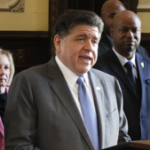
“I’m very interested to see how the people of Indiana and the voters of Indiana feel about the massive increases in taxes that are being proposed,” Pritzker said at an unrelated event in Chicago on Tuesday.
Pritzker said Illinois officials continue to have positive discussions with the Bears.
“I’m going to do everything I can without harming the taxpayers of the state of Illinois in the process of making sure we can do everything we can to keep them in the state,” Pritzker said.
Propheter said that the tax-increment deals related to property taxes at either site will have a negative impact on other property tax payers in the area and that states like Illinois that have gone “buck wild” on TIFs have created an environment where property taxes continue to rise as the costs of services increase but the property tax base is limited.
The Bears have asked for “property tax certainty” which Propheter said is actually property tax increases for those outside the TIF.
He told The Center Square that he estimated that the value of the property tax freeze in Arlington Heights would be worth about $2 billion over 30 years, or $67 million a year on average, based on the “square footage uses proposed, comparable uses currently around the race track and assumptions that understate the true property tax cost.”
“You’re removing revenue from the general fund by diverting it to debt service through these TIFs,” Propheter said. “What does that end up doing? It ends up pushing property taxes upward and it ends up pissing people off because their property taxes are higher because you keep narrowing the tax base by siphoning off parts of the tax base.”
Propheter said that many of the details of each deal are not yet available and the final legislation hasn’t been amended in Illinois but “I expect Illinois’ legislation to ultimately be more lucrative.”
Debt service costs, which are a huge part of stadium and development costs, also can differ from state to state.
In Nashville, for instance, Nashville’s Metropolitan Sports Authority took out $760 million in revenue bonds on a $2.2 billion stadium project for the Titans but created a tax capture over the team’s 30-year lease that was expected to take in more than $3 billion to pay off those bonds as well as paying for ongoing maintenance and stadium improvements at the site.
The debt service on Indiana taxpayers funding half of a stadium or Illinois taxpayers funding infrastructure at the site while the Bears pay for stadium costs will be an important factor, according to Propheter.
“The largest difference in these two deals will boil down to that debt service cost,” Propheter said.
Whether the team or a local or state government has to pay for those National Football League required improvements will also be a large factor in negotiations as well as Pritzker saying that he wants a new stadium to be affordable for fans, something that reporting from The Center Square has shown is not true at the newer stadiums with increased personal seat license and ticket costs as publicly funded stadiums move to more high end areas and less traditional seating.
DeMause said that the only people who really know if the Bears’ threat to move to Indiana is real or not, or at what dollar amount it would be worthwhile, are in the Bears’ organization. But, while the threats to move to other areas of Illinois were not compelling to the Illinois Legislature, the Indiana threat has clearly been noticed.
The same was true for the Kansas City Chiefs, though the Cleveland Browns were able to create an in-state bidding war before announcing they plan to move to Brook Park for a $2.4 billion stadium.
“A bidding war is always the best way to extract money from local officials, if only because the local officials can then use that as butt covering,” DeMause said.
Meanwhile, in Chicago, the city’s Park District which owns Soldier Field and the land that surrounds it, is proposing a $630 million renovation to turn the stadium into a concert and special event stadium including $130 million in stadium renovations and half a billion dollars in surrounding infrastructure. A portion of that is proposed to be paid for with the state’s road fund.



Mostly Sunny then Showers And Thunderstorms Likely
Latest News Stories
Key Stretch of Bell Road on Track for Thanksgiving Reopening, Committee Approves Additional Funds
Will County Leglislative Committee Opposes Federal Push for Heavier, Longer Trucks
Will County Reports Progress in Opioid Fight, Highlights New FDA Labeling Rules
In-House Staff Completes Major Renovations at Will County Adult Detention Facility
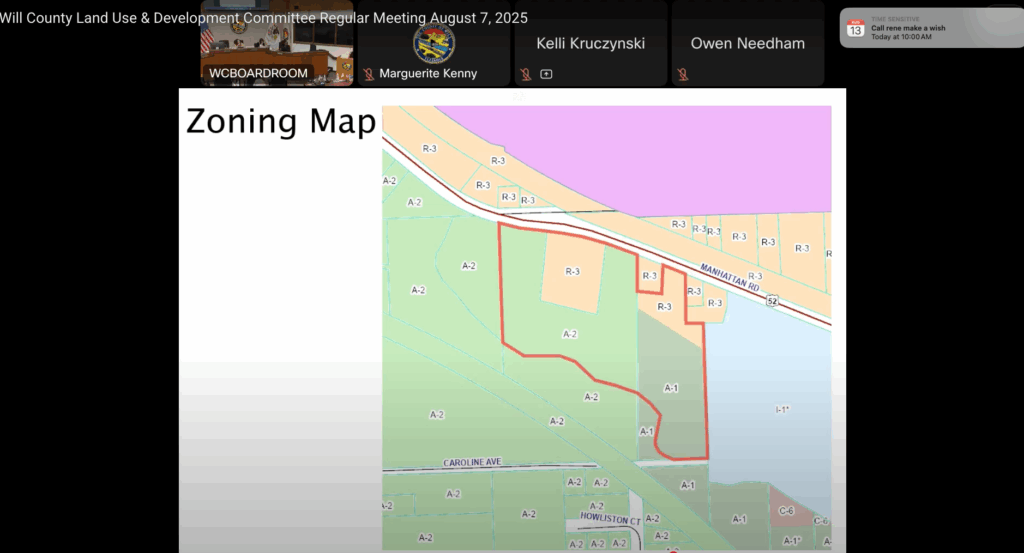
Will County Advances Truck Repair Facility Plan on Manhattan Road Despite Resident Objections
PZC Grants Variance for Oversized Garage in Joliet Township, Reversing Staff Recommendation
Will County Public Works Committee Approves Over $1.1 Million in New Agreements for 80th Avenue Project
Meeting Summary and Briefs: Will County Board Legislative Committee for August 5, 2025
Meeting Summary and Briefs: Will County Board Capital Improvements & IT Committee for August 5, 2025
Meeting Summary and Briefs: Will County Board Public Health & Safety Committee for August 7, 2025
Meeting Summary and Briefs: Will County Board Public Health & Safety Committee for August 7, 2025
Meeting Summary and Briefs: Will County Land Use & Development Committee for August 7, 2025

Meeting Summary and Briefs: Will County Planning and Zoning Commission for August 5, 2025