
Ad-Hoc Committee Retains Noise Ordinance Despite Enforcement Frustrations
Will County Ad-Hoc Ordinance Review Committee Meeting | Jan. 13, 2026
Article Summary: The Ad-Hoc Ordinance Review Committee voted to retain the county’s public nuisance noise ordinance despite members describing it as “useless” without proper enforcement tools. The discussion highlighted a lack of calibrated decibel meters within the Sheriff’s Office necessary to prosecute violations.
Noise Ordinance Key Points:
-
Enforcement Gap: Board Member Sherry Newquist criticized the current situation, noting that without decibel meters, deputies cannot prove violations, making the ordinance difficult to enforce.
-
Equipment Needs: Assistant State’s Attorney Phil Mock explained that the courts require scientific standards for noise violations, necessitating calibrated decibel meters which the Sheriff’s Office currently does not maintain.
-
Future Funding: The committee discussed the need to lobby the Sheriff’s Office or allocate specific budget funds to purchase and maintain the necessary equipment.
Frustration over loud parties and music took center stage at the Will County Board Ad-Hoc Ordinance Review Committee meeting on Tuesday, January 13, 2026, as officials debated the effectiveness of the county’s noise regulations.
While reviewing Chapter 93 regarding Public Nuisances, Board Member Sherry Newquist expressed strong dissatisfaction with the current state of enforcement.
“I just want to say for the record that our noise ordinances are absolutely useless,” Newquist said. She recounted a situation where a resident could not get the Sheriff’s Department to issue a ticket for a neighbor holding concerts because the deputies lacked the means to measure the noise level. The resident eventually had to install his own meter to prove the violation.
Assistant State’s Attorney Phil Mock provided historical context, explaining that previous ordinances based on subjective hearing were ruled unenforceable by the courts. The current ordinance requires a scientific standard—specifically, a decibel reading—to withstand legal scrutiny.
“The problem is not our ordinance,” Mock said. “The problem is somebody needs to convince the Sheriff… to buy the new decibel meter and keep it accessible.”
Mock noted that while the department had meters in the past, they require periodic calibration to remain valid in court, a practice that has seemingly lapsed.
Committee members discussed the possibility of approaching the Sheriff regarding the budget for such equipment in the future. “I would say keep it on the books because it is a chronic problem,” Member Daniel Butler said.
The committee voted unanimously to move the Chapter 93 amendments to the Executive Committee, keeping the noise regulations in place.




Mostly Sunny then Slight Chance Showers And Thunderstorms
Latest News Stories

Florida to crack down on H-1B visas, following Trump’s lead
Expert: Arizona’s 2026 budget faces Big Beautiful Bill impact

Research institute to Congress: Prioritize American healthcare over noncitizens

Illinois beef producers say Trump’s Argentina beef plan hurts farmers

Illinois quick hits: Bailey family announces memorial services; digital currency scam losses

WATCH: Expect tax and fee increases for veto; Democrats want more sanctuary policies
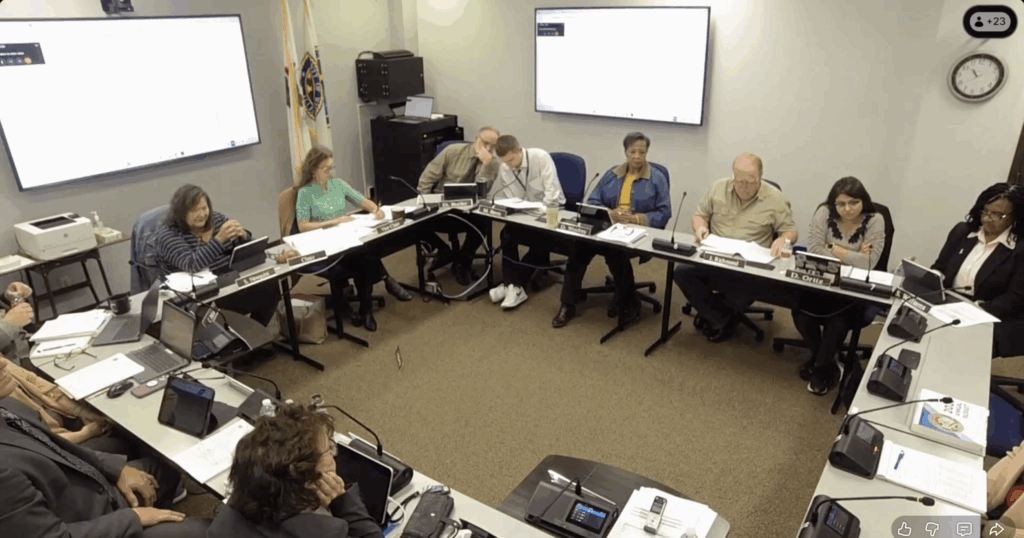
Will County Health Department Pleads for $1 Million to Avert ‘Weakened Public Health System’

Judge: Benefits of feeding babies beat risk claims in NEC lawsuits

Illinois quick hits: Raoul joins SNAP benefits lawsuit; disaster declaration denial appealed

WATCH: Democratic attorneys general sue feds to release food benefits
WATCH: GOP lawmaker: Pritzker-backed energy omnibus will lead to higher bills

Illegal border crossings in September historically low