Last four government spending bills pass U.S. House
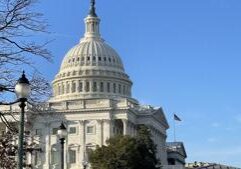
The U.S. House finished the last of its fiscal year 2026 appropriations work Thursday with the passage of the last four government funding bills, sending them over to the Senate for final approval.
The upper chamber has until Jan. 30 to pass the bills, which provide a total of $1.2 trillion for the departments of Defense; Labor, Health and Human Services, and Education; Transportation and Housing and Urban Development; and Homeland Security.
“Despite the noise, despite our slim margins…this team got it done,” House Speaker Mike Johnson, R-La., told reporters after the vote. “The House has now passed all 12 appropriations bills, and soon they’ll become law. Many people in this room said that could never be done before. We’ve had lots of naysayers, but we worked right through that.”
The Defense, Labor-HHS-Education, and Transportation-HUD bills passed as a three-bill minibus with wide bipartisan support.
The Defense appropriations bill allocates $839 billion for military personnel, research, equipment, and other activities. It also directs $13 billion toward President Donald Trump’s “Golden Dome” project, establishes a network of commercial factories able to rapidly transition to military equipment production, and gives military servicemembers a 3.8% pay raise.
The $221 billion Labor-HHS-Education bill funds early childhood education assistance, Pell Grants, rural health and job training programs, and biomedical research.
The Transportation-HUD bill includes $102 billion, with $25 billion of that going to transportation and border security and the remaining authorized for rental and housing assistance programs, mortgage insurance, among other things.
Due to concerns over Immigrations and Customs Enforcement activity across the country, the $64 billion for the Homeland Security bill was voted on separately and received only seven Democratic votes.
Among other things, the Homeland Security bill keeps funding levels for ICE flat at $10 billion and sets aside $20 million to purchase body cameras for federal immigration officers.
But many Democrats had spoken against the bill, arguing that it does not do enough to restrict the authority of ICE officers.
“My ‘no’ vote today is because I do not think the Congress should authorize public money to a department that is being run without proper oversight, accountability, or regard for the rule of law,” Rep. Chris Deluzio, D-Pa., said. “There are real guardrails we need to put around the conduct of ICE in this moment, and I do not think this bill does that.”
When the Senate returns next week, the four bills, along with two more House-passed appropriations bills already waiting, will receive a vote. Three other appropriations bills have become law, and three more currently await the president’s signature.



Mostly Sunny
Latest News Stories
Meeting Summary and Briefs: New Lenox School District 122 Board for Nov. 2025

County Board Approves Women’s Residential Treatment Center in Joliet
White business owners are biggest share of Illinois’ diversity-preferred contract group
Meeting Summary and Briefs: New Lenox Village Board for December 15, 2025

Township Abates $285,000 in Taxes for Senior Housing Bonds
Meeting Summary and Briefs: Will County Board for December 18, 2025

2025 illegal entries in Texas: Nearly half the gotaways reported in previous years

Nashville speaker maker plans to move overseas to avoid tariffs
Supreme Court could redefine 14th Amendment application
Missouri year in review: capital gains eliminated, Medicaid increased
2025 in review: Historic border security actions taken by Trump

Free speech under fire nearly 300 times in 2025 on campus