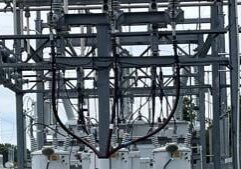
Pritzker signs energy omnibus with new charge for ratepayers in 2030
(The Center Square) – Gov. J.B. Pritzker has signed sweeping energy legislation that will add a new line item to Illinois utility bills.
Senate Bill 25, the Clean and Reliable Grid Affordability Act (CRGA), went to the governor’s desk Nov. 25, 2025 after passing both houses of the General Assembly during fall veto session in October.
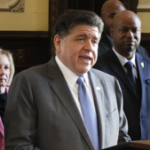
Pritzker signed the bill Thursday morning at Joliet Junior College.
One hotly-debated provision of the new law adds a new charge on Illinois electric bills, starting in 2030, to pay for state procurement of three gigawatts of battery storage.
SB 25 lifts lifts the state’s moratorium on large nuclear reactors and requires utility companies to create virtual power plants.
The new law also aims to promote energy equity.
CRGA programs require utility companies administering state energy efficiency programs to meet a minimum level of spending for low-income households while removing the formula rates they receive for administering those programs.
At Thursday’s bill signing, Pritzker blamed the Trump administration and private grid operators for rising energy prices and said Illinois is a net electricity exporter.
“That means that we produce more electricity than we use. It’s an advantage we have over other states, and we want to maintain that advantage,” Pritzker said.
The governor said his administration would leave no stone unturned in the work to produce more electricity, lower prices and a secure energy future.
A recent report by three state agencies, however, said Illinois would have an energy shortage in four years if the state continues on its current path.
The Illinois Power Agency, Illinois Environmental Protection Agency and Illinois Commerce Commission submitted the 2025 Resource Adequacy Study to the General Assembly Dec. 16. The report said both PJM and MISO, multi-state electrical grid operators impacting Illinois, are expected to face capacity shortfalls over the coming decade “unless additional new capacity and resources are developed.”
State Rep. Nicole La Ha, R-Homer Glen, said she supports a comprehensive approach to energy.
“But I couldn’t support a big consumer hit like we just saw. This report just reiterates everything that we have been seeing,” La Ha told The Center Square.
State Sen. Bill Cunningham, D-Chicago, joined Pritzker at Thursday’s press conference and said SB 25 would keep costs from rising.
“We’re making it easier to develop renewable energy, we’re going to deploy battery storage, we’re lifting the nuclear moratorium. That’s all going to bring more supply onto the grid, and that will help hold the line on our electrical bills,” Cunningham said.
La Ha said she wanted to see more consumer protection.
“We’re going to be seeing higher rates, less production. I really want to make sure that the consumers are first and foremost protected, which I did not see in this last version of the bill,” La Ha said.
State Sen. Darby Hills, R-Barrington Hills, said SB 25 eliminates protections on utility rates and puts families at risk of higher bills.
“Families are already struggling with high utility costs, and this law removes the only real protection that kept those bills in check. Eliminating rate caps means higher bills, plain and simple. I voted NO because Illinois families deserve affordable power and real relief,” Hills said in a statement.
CRGA follows previous large-scale energy legislation in Illinois. The General Assembly passed the Future Energy Jobs Act (FEJA) in 2016 and Pritzker signed the Climate and Equitable Jobs Act (CEJA) into law in 2021.
Many Illinoisans saw record-high electric bills last summer, when energy consulting firm Energy Professionals reported that ComEd’s rates increased 53% and Ameren Illinois’ rates increased 47%.
Environmental activists, organized labor and solar energy companies supported CRGA.
“Illinois is doubling down on its commitment to the clean energy goals we set in the Climate and Equitable Jobs Act while proactively addressing the energy affordability crisis spurred by the influx of data centers, poor regional planning, and federal attacks on clean energy,” the Illinois Clean Jobs Coalition said in a statement.
Business groups opposed the legislation.
In a letter to the governor last month, the National Federation of Independent Business cited expanded mandates of project labor agreements, discrimination against non-union contractors and workers, and subsidies to be paid by utility ratepayers.
The Illinois Manufacturers’ Association also urged Pritzker to veto SB 25.
IMA President and CEO Mark Denzler said officials need to repeal the closure date for clean coal and natural gas generation, things that are set by previous state law to shutter by 2030 and 2045.
“It’s simply a supply, demand issue,” he said. “And this report says that Illinois is going to struggle and there’s going to be a date in the near future where we may not have enough power to meet the demand we need.”
Greg Bishop contributed to this story.




Partly Sunny
Latest News Stories

Everyday Economics: A stalled labor market and why the next data points matter

Assaults against ICE up 1300%, vehicular attacks up 3200%, death threats up 8000%
Bipartisan bill to cap annual deficits at 3% could curb debt growth

One year in, a ‘ho-hum’ jobs report
Five battleground governor’s races for 2026

Chicago Flips Red calls for audit after public schools report

Capital Imp Committee: Begins Drafting Policy to Regulate Artificial Intelligence in County Government

Public Health Committee Chair Demands Animal Control Agreements for Crete, Monee

Public Works Committee Considers Taking Over Kankakee County Line Road to Expedite Bridge Repairs

Trump signs order protecting Venezuelan oil revenue from legal claims
Retirements and resignations to impact midterms as balance of power at stake
U.S. Supreme Court to hear anti-oil cases with energy costs on the line
Constitutional concerns raised over Illinois’ first civil hate crime case
Peotone Man Charged With Disorderly Conduct, Criminal Damage at New Lenox Target