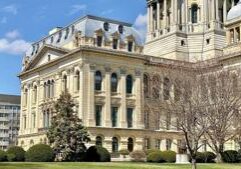
Illinois’ compact fluorescent bulb ban begins to take effect
(The Center Square) – One of the nearly 300 new laws that took effect in Illinois New Year’s Day is a ban on compact fluorescent light bulbs.
State Rep. Nicholas Smith, D-Chicago, introduced House Bill 2363 in February 2023. Gov. J.B. Pritzker signed the measure in August 2024.
The law prohibits the sale and distribution of screw-base and bayonet-base compact fluorescent lamps. Restrictions on pin-base compact fluorescent and linear fluorescent lamps are set to begin in 2027.
HB 2363’s Senate sponsor, state Sen. Adriane Johnson, D-Buffalo Grove, said toxic pollutants in fluorescent bulbs pose a health risk.
According to a report by the Public Interest Research Group (PIRG), three in four fluorescent lamps are improperly disposed of, thus releasing mercury into the environment.
State Rep. Nicole La Ha, R-Homer Glen, voted in favor of HB 2363 but said lawmakers should focus on smart, affordable solutions.
“Any time that we have unfunded mandates or things that are going to affect our small businesses, or there’s more red tape that we have to push people through, I’m not always going to be very excited about those things,” La Ha told The Center Square.
When “An Inconvenient Truth” documentary was released in 2006, former Vice President Al Gore encouraged Americans to replace incandescent light bulbs with compact fluorescents. Many environmental groups also promoted CFLs.
Tosi Ufodike was an Illinois House candidate in 2024, when she lost to incumbent state Rep. Nabeela Syed, D-Palatine, in the general election. Ufodike is also campaigning for the Republican nomination in 2026.
Ufodike noted that Vermont became the first U.S. state to approve a ban on fluorescent bulbs when state lawmakers approved legislation there in 2022.
“There’s a growing trend to have energy-efficient LED lighting. Of course, we always want to have energy-efficient lighting and resources, but I always look at, ‘What’s the cost?’” Ufodike told The Center Square.
Ufodike said suburban voters are stretched thin.
“They’re worried about gas. They’re worried about putting food on the table. As long as it’s done with the taxpayer in mind, then I’m ok with it,” Ufodike said.
Kevin Bessler contributed to this story.



Sunny
Latest News Stories

WATCH: Lawmakers spar over taxpayer-funded Trump investigation
Chicago splits pension payments in hopes of Improving cash flow

Adequate preparation missing for GenAI in higher ed
Following GOP criticism, Pritzker finds $481.6 million in budget reserves

Critics slam Illinois’ $36M park grants as political, wasteful
First arrests made following St. Paul church attack, ‘more to come’

Illinois Quick Hits: Chicago pays OT to potentially ineligible workers
50 Donors Sought for Community Blood Drive on Jan. 29
County Authorizes Condemnation to Advance Francis and Marley Road Improvements

Board Approves 2026-2027 School Calendar

Arizona Senate panel backs renaming highway loop after Kirk
Index shows top states that support education freedom