Don’t count on lower electricity prices in 2026
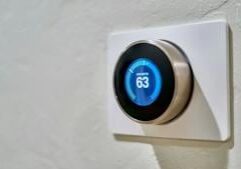
For 67 million people relying on electricity from the regional power grid, PJM, cheaper utility bills in 2026 are little more than a pipe dream.
It’s not an unexpected blow, despite moves from the Trump administration and state regulators to keep prices in check. Why? Because there’s simply not enough power generation – from gas and nuclear plants, wind and solar farms and battery storage reserves – to feed the grid.
PJM’s latest capacity auction, which determines power supply for the coming year, reveals rapidly rising load forecasts, primarily driven by AI-powered data centers, meaning residents across the mid-Atlantic, Washington D.C., and parts of the Midwest will pay more for a less reliable grid.
In its report on the 2027-2028 Base Residual Auction, PJM said it secured 134,479 MW of unforced capacity generation at $333.44/MW-day – an increase of 1.3% over the prior year.
That leaves the grid 6,623 MW short, which is enough supply to power roughly 6.6 million homes. Stu Bresler, PJM’s incoming chief operating officer, said customers in its territory shouldn’t assume the worst, pointing to sufficient reserves to cover a “once-in-10-year” event.
The term describes an industry-wide reliability standard that requires power grid operators to secure enough supply to limit blackouts to once every decade. However, it’s not a guarantee due to unpredictable weather or market conditions.
“But this auction leaves no doubt that data centers’ demand for electricity continues to far outstrip new supply, and the solution will require concerted action involving PJM, its stakeholders, state and federal partners, and the data center industry itself,” Bresler said.
PJM said its peak load forecast is approximately 5,250 MW higher than in the 2026-2027 capacity auction, with nearly 5,100 MW of that increase attributable to data center demand. The cleared resource mix includes 43% natural gas, 21% nuclear, 20% coal, 5% demand response, 4% hydro, 2% wind, 2% oil and 1% solar.
A joint statement from the Electric Power Supply Association and PJM Power Providers Group warned that customers enjoyed record low supply prices over the last decade, however, a new era has dawned and there is a cost to building the projected necessary resources on the timeline required.
They remain focused, it says, on meaningful and cost-effective solutions to meet the moment: removing non-market barriers to development, such as permitting and siting roadblocks, to help bring needed resources online, addressing supply chain constraints, and providing regulatory certainty for investors.
It’s top-of-mind for state officials too, from Gov. Josh Shapiro to legislative champions of continued energy investment, like Republican Sen. Gene Yaw, who chairs the chamber’s Environmental Resources and Energy Committee.
Shapiro, in the wake of the auction results, reiterated his role in forcing PJM to change a price cap that kept increases from skyrocketing further through a complaint to the Federal Energy Regulatory Commission earlier this year.
“I sued PJM because it is unacceptable for them to do nothing as consumers pay sky-high utility bills while getting nothing in return,” Shapiro said in a statement. “My Administration has once again stopped billions of dollars in unnecessary and unjustified energy price hikes from being passed on to families and businesses.”
He’s also been on the record about pulling the commonwealth out of the grid if reforms aren’t adopted to speed up project development. Doing so would be unprecedented.
Pennsylvania, the “P” in PJM, was apart of the grid from its conception more than a century ago, and it generates 25% of the energy that powers the system. According to the P3 Group, roughly 80% of the new generation planned to increase supply in coming the years will be built in the commonwealth.
“PJM needs real reform and they are running out of time to protect consumers from their inaction,” Shapiro said. “My Administration will continue to build more energy generation right here in the Commonwealth and push PJM to fix its broken process so we can lower costs, strengthen reliability, and keep more money in the pockets of Pennsylvanians.”
Yaw called the governor’s threats “impressive” and “misguided,” noting that PJM is powerless to change state policies that focus on climate action targets and are outpaced by growing demand.
“It’s a traffic controller for the grid, not the driver of energy costs,” he said. “The real reason electricity prices are rising is because we’re not producing enough of it. Over the past decade, aggressive renewable mandates have forced the premature retirement of dependable baseload generation without replacing it with sufficient new baseload generation capacity. That’s not PJM’s fault. That’s a policy failure.”
He added that “regulatory reshuffling” won’t convince developers to build 67,000 MW renewable energy projects “sitting on the sidelines.”
“Making PJM the boogeyman is good short-term politics. Artificially and temporarily capping electric rates stifles new generation and sends the message: don’t build in the PJM grid,” Yaw said. “That is disastrous for Pennsylvanians in the long term. As I’ve said before, if Pennsylvania is serious about protecting consumers, we must stop pointing fingers and start investing in real solutions.”
Christen Smith contributed to this report.

Clear
Latest News Stories
Illinois Quick Hits: IDPH accountability officer fired

Los Angeles County considers creating ICE-free zones

States sue feds over gender ideology rules on health grants

Johnson expects on-time passage of all govt funding bills as two more head to floor

WATCH: Advocates urge action on trans sports ban

Advocacy groups praise Trump admin’s healthcare price transparency commitment

Trump: Chicago crime is down in spite of ‘incompetent’ Pritzker

‘Put politics aside’ to support no tax on tips, Illinois Democrat says
Former ‘Vegas’ coroner seeks county administrator job after journalist’s murder
WATCH: U.S. Supreme Court weighs trans sports ban
House Republicans unveil framework for second ‘big, beautiful bill’
Pritzker: State will not build stadium for Bears