WATCH: Illinois continues work to reduce state’s high SNAP error rate
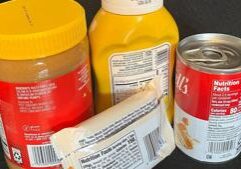
(The Center Square) – State agency officials continue to address the error rate with Illinois’ handling of federal food subsidies.
During a Joint Committee on Administrative Rules hearing this week, the Illinois Department of Human Services answered questions about the state’s handling of the Supplemental Nutrition Assistance Program. State Sen. Don DeWitte, R-St. Charles, asked why the error rate has gone from 5.7% to 11.5% in 8 years.
“It’s a very expensive proposition for the state of Illinois,” DeWitte said during Tuesday’s JCAR meeting in Chicago. “If the number stays high, correct, to the tune of about $800 million.”
DHS bureau chief Sara Bechtold said they are working through ways to bring the rate down.
“I can’t speak to what happened in 2017. But I know that since I have started and since the rollout of the public law … we have been doing everything that we can to come up with a plan that will help us minimize those errors,” Bechtold said.
Bechtold said they are looking at adjustments of cost of living allocation rates to get payments correct and having renewals every six months instead of yearly, among other changes.
State Rep. Ryan Spain, R-Peoria, asked the Illinois Department of Human Services about how they’re working to lower the SNAP error rate. Bechtold said there are difficulties.
“Guidance from the federal level has been very slow in coming down the pipes, and has been very vague,” she said.
Spain said it’s imperative to taxpayers that the state drive the error rate down for food subsidies to ensure those who need it get it.
“A very important benefit, but it’s a very expensive benefit,” Spain said. “And if we can reduce the error rate as a state of Illinois, we’ll be doing a good service for both of those groups.”
If the state’s 11.5% error rate isn’t nearly cut in half to below 6%, Illinois taxpayers could be on the hook for hundreds of millions of dollars to cover the errors.
###



Slight Chance Rain Showers then Partly Sunny
Latest News Stories
Will County Division of Transportation Requests $1 Million Increase to Highway Levy to Combat Inflation
Will County Hears Proposal to Establish County-Focused Land Bank for Distressed Properties
Letlow and Fleming headed for runoff in Louisiana U.S. Senate race

Lincoln-Way East Powers Past Lincoln-Way Central, 10-1

Lincoln-Way West Rallies to Edge Lincoln-Way Central in 10-8 Victory
Spanberger vows to get Virginians ‘representation we deserve’
Spanberger vows to get Virginians ‘representation we deserve’
Spanberger vows to get Virginians ‘representation we deserve’
Spanberger vows to get Virginians ‘representation we deserve’

EXCLUSIVE: The Oversight Project calls for investigation into Fusus, Oak Brook contract

EXCLUSIVE: The Oversight Project calls for investigation into Fusus, Oak Brook contract

EXCLUSIVE: The Oversight Project calls for investigation into Fusus, Oak Brook contract