Critics slam Mamdani’s policies, push for free markets
In the wake of Zohran Mamdani’s rise to become the mayor of New York City, researchers and policy analysts are slamming his policies and calling for free market economics to remain dominant.
Researchers at the Heritage Foundation, a conservative think tank, discussed Mamadani’s policies during a panel on Friday and highlighted how they could make the cost of living more expensive in the nation’s largest city.
One of Mamdani’s proposals includes raising corporate taxes from 9.5% to 11.5%, to match New Jersey’s tax rate.
John Peluso, a research associate at the Heritage Foundation, said Mamdani’s proposal would decrease the competitiveness of businesses in New York City. He said this will cause wealthy individuals and businesses to leave the city in response to these policies.
“As those people leave, the people that are stuck and left behind are going to be dealing with more and more of the burden, the taxes, and there’s going to be less people,” Peluso said.
Panelists also criticized Mamdani’s proposal to implement five government-run grocery stores in each borough in New York City. The grocery stores would not pay property taxes or for rent on a building in which it operates.
Nicole Huyer, a senior research associate at the Heritage Foundation, said the grocery stores would burden taxpayers and drive out private competition.
“We see that government use of funds, especially when its not their own, is oftentimes inefficient and it’s not used well,” Huyer said.
Huyer said that government-run stores would sell at artificially low prices. These prices, she argued, would drive private competition away or out of business.
“They’ll look to cut costs in other ways, and that will be through terminating employees, relocating to lower tax, lower cost jurisdictions, or just going out of business altogether,” Huyer said.
Huyer pointed to examples in Florida and Kansas where government-run grocery stores briefly operated but were eventually shut down or returned to private ownership.
“We have to look to these real-world, practical failures when coming up with policy solutions, because big government socialism is not the answer,” Huyer said.
She acknowledged government-run grocery stores exist across the United States today. However, she advocated for more attention to wait times, profit-to-cost ratios and food shortages in the store.
“Using taxpayer dollars, just pumping money into a store or program may artificially stimulate it in the short term, but that is obviously not a sustainable long-term solution,” Huyer said.
Mamdani also proposed creating universal child care in New York City. Rachel Grezsler, a research fellow at the Heritage Foundation, said regulations on child care at government-run centers will cost too much for taxpayers.
Grezsler said increased regulations on childcare providers has led to an overall decrease in childcare options across the country over the past several decades.
“We can only imagine all those regulations that are simply going to make childcare even more costly in New York City,” Grezsler said. “It is not making childcare more affordable if you say it’s free, simply by increasing the costs and making somebody else pay for it.”
Grezsler also said Mamdani’s proposed $30 per hour minimum wage by 2030 would exacerbate the cost of childcare. Grezsler estimates that childcare costs for two children could go up to $75,000 per year.
“It might seem like it’s going to be free to me, but it’s not free if the cost is just more,” Grezsler said. “You cannot tax the millionaires and the billionaires enough, even if they stay in the city.”
Peluso also criticized Mamdani’s plan to purchase 200,000 housing units over the next 10 years to be run by the city government. According to Mamdani’s website, it would cost $100 billion over 10 years to purchase these units.
“That is going above and beyond the reasonable level that a city can afford,” Grezsler said. “That’s a serious, serious burden that’s going to be leveled on everybody, and it’s going to be leveled on them for generation after generation.”
Advocates on the panel pushed for expanding the supply of job opportunities through apprenticeship programs and looking to other options for childcare assistance, like a neighbor or close friend.
“Free markets are the solution; supply side growth policies that expand the private sector are solutions, ones that promote fiscal autonomy, ones that encourage competition and ones that allow people to essentially keep the fruits of their own labor and that encourage and allow economic mobility,” Huyer said.
“We want individuals to be self-sufficient,” Huyer said. “We don’t want them to be reliant on the government, because when the government takes over, you essentially lose your freedom.”

Chance Showers And Thunderstorms
Latest News Stories

New Lenox 122 Eyes Future Budget Cuts to Offset Full-Day Kindergarten Costs, Approves Quad Plus Tax Abatement

Minooka Blasts Five Home Runs to Overpower Lincoln-Way Central 12-2

New Lenox Seeks $2.5 Million State Loan for Water Main Replacements, Sets $1.2 Million in Sureties for Spencer Meadows
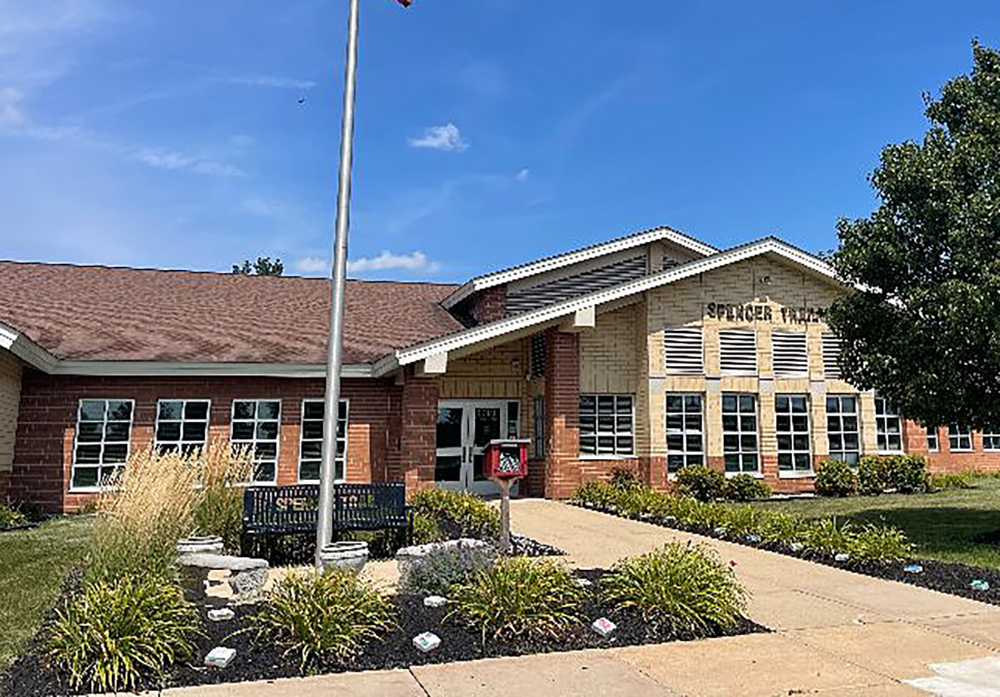
Board Approves $1.04 Million in New Curriculum for New Lenox District 122

Meeting Summary and Briefs: New Lenox Community Park District Board of Commissioners for February 18, 2026

Meeting Summary and Briefs: New Lenox Township Board of Trustees for February 12, 2026

Tingley’s Perfect 5-for-5 Day, Shutdown Bullpen Rally Lincoln-Way Central Past Joliet Catholic 13-6
New Lenox Mayor Slams Springfield Affordable Housing Proposal as “Garbage,” Board Passes Opposing Resolution

Frankfort Man Arrested by State Police for Threatening Governor Pritzker
St. Charles East Blanks Lincoln-Way Central 10-0 Behind Dominant Pitching and Majkszak’s Power
Meeting Summary and Briefs: Capital Improvements & IT Committee for March 3, 2026

New Lenox District 122 Approves Full-Day Kindergarten for 2027-2028, Extends Teacher Contract
New Lenox Park District Set to Launch Massive ADA Audits Across Dozens of Local Parks