U.S. Supreme Court frosty on Trump’s tariff power as world watches
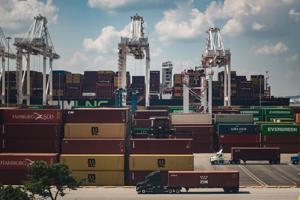
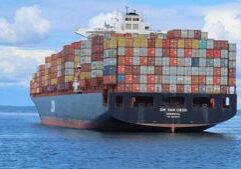
The U.S. Supreme Court gave President Donald Trump’s tariff authority a chilly reception on Wednesday, with his economic agenda hanging in the balance and businesses and consumers watching for higher prices.
After the president spent months talking about how much money his tariffs would generate, Trump’s Solicitor General D. John Sauer told the nation’s highest court Wednesday that the import duties are solely focused on regulation, not raising revenue.
Even the conservative wing of the Supreme Court was skeptical.
“The vehicle is imposition of taxes on Americans. That has always been the core power of Congress,” Chief Justice John Roberts said.
Robert’s remark came early in the hearing, which was slated for 80 minutes, but ran almost three hours.
“The justification is being used for the power to impose tariffs on any product, from any country, for any amount, for any length of time,” Roberts said. “I’m not suggesting it’s not there, but it does seem like that’s major authority.”
Twelve states, five small businesses and two Illinois-based toymakers have challenged Trump’s authority to impose tariffs under a 1977 law without Congressional approval. That law, the International Emergency Economic Powers Act, doesn’t mention the word “tariff” and has never been used to impose tariffs. Trump’s legal team argues that the law is a clear delegation of emergency power, granting the president broad authority to act in times of crisis.
Phillip Magness, a senior fellow at the Independent Institute, said the justices showed they had reservations about Trump’s claimed power under the law, frequently called IEEPA.
“It’s always hard to predict from questions, but it was clear to me that several of the justices were not buying the arguments of Trump’s attorney John Sauer – particularly his claim that tariffs are regulations and not taxes,” he told The Center Square.
Justices also shot difficult questions to the attorneys representing the states and small businesses that are challenging the tariffs.
Justice Samuel Alito asked Neal Katyal, the attorney representing the small businesses, if Congress had given the president power to regulate admission to a national park, would that also grant the president the power to charge an entrance fee. Katyal said the president could charge an entrance fee so long as the fee was not intended to raise revenue. Alito also had sharp questions for Katyal on other issues.
Justice Amy Coney Barrett posed a stickier question to Katyal and Oregon Solicitor General Ben Gutman, who is representing the 12 states that challenged Trump’s tariff authority. Barrett asked if the International Emergency Economic Powers Act gives the president the power to block all imports, why would it not grant the seemingly lesser authority of allowing the president to impose a tariff on all imports. Several other justices piled on with variations of this questions, including Justice Brett Kavanaugh.
Kavanaugh asked Gutman if that would leave a “doughnut hole,” as the government put it. Gutman said it was about protecting taxpayers.
“It’s not a doughnut hole, it’s a different type of pastry,” he replied, saying that when the government can reach into the pocketbooks of the people, the stakes are higher, which is why the Constitution gave taxation power to Congress and not the president.
Cato Legal Fellow Brent Skorup said “most justices appeared attentive to the risks of deferring to a president’s interpretation of an ambiguous statute and the executive branch, ‘discovering’ new powers in old statutes.”
“The government’s reading of IEEPA not only stretches the text beyond recognition, but it also threatens the separation-of-powers principles central to our constitutional design,” he said.
Magness said he sees a path for Trump to win, but not much of one.
“The Trump administration went all-in on its claim that tariffs are not taxes, but rather regulations. I believe that they did so because they see this as the only path to victory since the court has historically given more leeway to presidents in the foreign policy arena,” he told The Center Square. “I think the administration has a difficult path ahead, given how poorly their argument about tariffs not being a tax was received. Their best remaining argument is to hope that some justices grant them expansive foreign policy leeway in spite of the clear domestic tax policy implications. That path appears to have narrowed quite a bit in today’s hearing.”
Trump has said the future of America is on the line.
“Tomorrow’s United States Supreme Court case is, literally, LIFE OR DEATH for our Country,” Trump said Tuesday afternoon in a social media post. “With a Victory, we have tremendous, but fair, Financial and National Security. Without it, we are virtually defenseless against other Countries who have, for years, taken advantage of us.”
For Alex Jacobsen, a second-generation family business owner in Nashville, Tenn., who makes the speakers used to record Michael Jackson’s “Thriller” album, the problem has never been with the tariffs.
“It’s how they’re implemented, without any due process, without any Congress or input from the public,” he told The Center Square ahead of arguments.
The court is expected to hand down a decision by the end of June if not sooner.
Last week, the U.S. Senate narrowly voted to end the national emergency Trump used to impose global tariffs. Four Republicans joined Democrats in the effort, which is largely symbolic because the U.S. House has agreed not to take up the issue until March.
In August, the U.S. Court of Appeals for the Federal Circuit affirmed a previous lower court ruling saying Trump did not have the authority, but said Trump’s tariffs could remain in place while the administration appeals to the U.S. Supreme Court. In the 7-4 decision, the majority of the Federal Circuit said that tariff authority rests with Congress.
An August report, from the Congressional Budget Office, estimated tariffs could bring in $4 trillion over the next decade. That CBO report came with caveats and noted that tariffs will raise consumer prices and reduce the purchasing power of U.S. families.
Trump has said he wants to use tariffs to restore manufacturing jobs lost to lower-wage countries in decades past, shift the tax burden away from U.S. families and pay down the national debt. Economists, businesses and some public companies have warned that tariffs will raise prices on a wide range of consumer products.
A tariff is a tax on imported goods.

Mostly Clear
Latest News Stories

Will County Receives Detailed Update on Landfill Expansion Investigation
Meeting Summary and Briefs: Will County Landfill Committee for August 7, 2025

Illinois quick hits: Fatal crash involved Guatemalan national; tentative Chicago firefighters contract
WATCH: Sonya Massey bill requiring full employment history for police candidates now law

Green Garden Township Moves Forward with New Town Hall Plans, Awaits Grant Approval

Township Board Approves Budget Transfers to Fund Assessor’s Staff and Correct Rent Payment
County Rep Cites Solar Lawsuits, Grant Shortfalls as Key Issues Facing Will County

Assessor’s Office Hires Staff to Handle Workload After 6% Multiplier Hits Property Owners
Township Appoints Temporary FOIA Officer During Trustee’s Leave of Absence
Meeting Summary and Briefs: Green Garden Township Board for August 11, 2025

About Us

WATCH: Illinois In Focus Daily | Monday Aug. 11th, 2025