Supreme Court justices question businesses challenging Trump’s tariffs
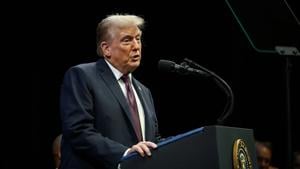
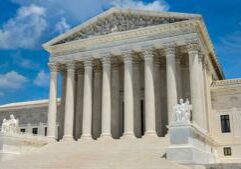
The U.S. Supreme Court presented tough questions to two lawyers challenging President Donald Trump’s use of a 1977 law to impose tariffs on nations around the globe.
A group of Democrat-led states, five small businesses and two Illinois-based toymakers have challenged the president’s authority to impose tariffs without Congressional approval. The International Emergency Economic Powers Act, which Trump used to impose tariffs, doesn’t mention the word “tariff” and has never before been used to impose tariffs. They argue that only Congress has the power of the purse and that Trump can’t impose tariffs without approval from Congress.
However, Trump’s legal team argues that the law is a clear delegation of emergency power, granting the president broad authority to act in times of crisis.
Justice Samuel Alito asked Neal Katyal, the attorney representing the small businesses, if Congress had given the president power to regulate admission to a national park, would that also grant the president the power to charge an entrance fee.
Katyal said in that hypothetical situation the president could charge an entrance fee so long as the fee was not intended to raise revenue.
Justice Amy Coney Barrett posed a trickier question to Katyal and Oregon Solicitor General Ben Gutman, who is representing the Democrat-led states that challenged Trump’s tariff authority. Barrett asked if the International Emergency Economic Powers Act gives the president the power to block all imports, why would it not grant the seemingly lesser authority of allowing the president to impose a tariff on all imports. Several other justices piled on with variations of this questions, including Justice Brett Kavanaugh.
When Kavanaugh asked if that would leave a “doughnut hole” in the words of the government, Gutman said it had to do with protecting pocketbooks.
“It’s not a doughnut hole, it’s a different type of pastry,” he replied, saying that when the government can reach into the pocketbooks of the people, the stakes are much higher, which is why the Constitution gave taxation power to Congress and not the president.
Trump has used tariffs to try to reorder global trade to give U.S. businesses a home-field advantage. Trump put import duties on every U.S. trading partner, but American companies say they are the ones paying the new taxes. In some cases, companies pass the added costs to consumers, who were already frustrated by high prices before Trump took office in January.
Two lower courts have already ruled against Trump on tariffs. The Supreme Court’s decision in this case could have wide-reaching implications not only for businesses and consumers, but also future presidential power.




Chance Rain Showers then Partly Sunny
Latest News Stories

Chicago tax proposals draw concern over legality, ‘economic death spiral’
Illinois quick hits: Former governor proposes millionaire’s surcharge; digital state ID launched
U.S. Senate passes bill to release Epstein files, heads to Trump’s desk
Louisiana Rep. Clay Higgins defends Epstein ‘no’ vote
Abbott designates Muslim Brotherhood, CAIR as foreign terrorist organizations

Judge blocks feds from freezing California education funding

Texas appealing El Paso court ruling against new congressional maps
Elections board drops campaign finance fines against IL Senate President

Senate gears up for Epstein vote

Illinois corrections officials say they are on schedule for prison mail scan rule

Asset managers retreat from ESG push, report finds

U.S. House passes bill to release Epstein files, moves to Senate