Will County Committee Forwards Overhauled Purchasing Code Amid Debate on Local Contractor Preference
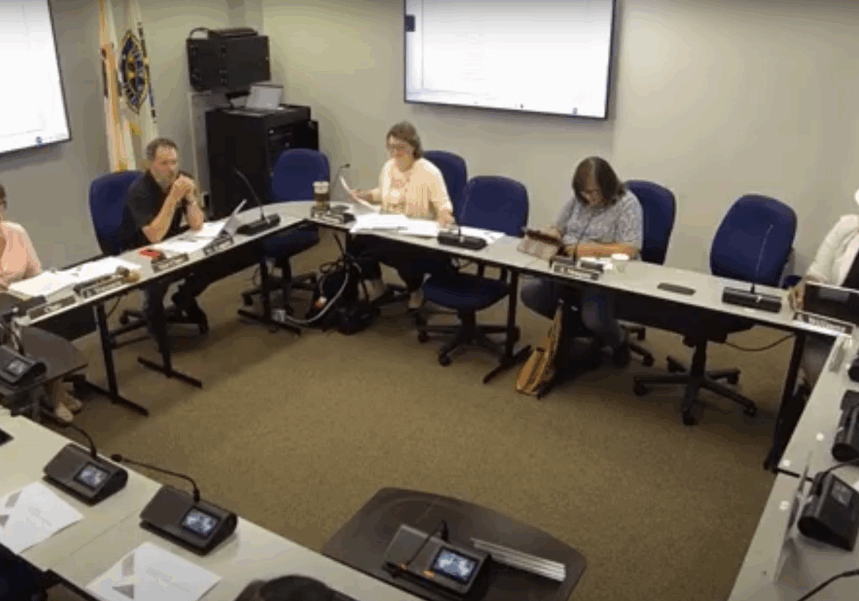
The Will County Ad-Hoc Ordinance Review Committee advanced a major overhaul of the county’s purchasing code Tuesday, but only after a split vote and a pointed debate over a separate, controversial proposal to give preference to local bidders.
The committee voted 3-2 to incorporate the county’s recently passed “responsible bidder ordinance” into the broader purchasing code, Chapter 41, and move it forward for Executive Committee review. The responsible bidder ordinance, approved by the full County Board in May, establishes specific criteria contractors must meet to bid on county projects.
However, the discussion was dominated by the related issue of a “local preference” ordinance, which had been withdrawn earlier this year after the Will County State’s Attorney’s office raised legal questions about the county’s authority to enact such a policy.
Board member Daniel J. Butler argued for tabling the entire chapter until the local preference issue could be definitively resolved.
“I would like to just hold off on this, move to the next one, revisit this chapter next month after we get a clearer definition or explanation,” Butler said. “I need stronger language to let me know that that is something that we cannot do for local contractors.”
The county’s chief of staff, Charles Pelkie, told the committee that based on his conversations with the State’s Attorney’s office, the path forward for a local preference ordinance was blocked.
“The State’s Attorney’s office has indicated to us that they don’t believe that the county, not being home rule, has the authority to pass a local preference ordinance,” Pelkie stated. “Based upon my conversations with the State’s Attorney’s office, it is not coming back.”
Committee legal counsel Phil Mock explained the history of Will County’s non-home rule status. When the option to have an elected county executive was placed on the ballot, it was paired with a provision for the county to opt out of home rule authority, largely over fears of unlimited taxing power. That measure passed, limiting the county’s ability to enact certain legislation without specific authority from the state.
An attorney from the County Executive’s office clarified that while the State’s Attorney’s initial position was to conduct more research, subsequent conversations confirmed the legal obstacle.
Member Mica Freeman suggested that even if the local preference issue is currently stalled, it should not prevent the committee from incorporating the already-passed responsible bidder ordinance into the code.
In a compromise, the committee agreed to advance the chapter while formally requesting a written statement from the State’s Attorney’s office on the legal viability of a local preference ordinance. That statement is expected to be available before the County Board’s Executive Committee meeting next month.
The motion to amend the purchasing code to include the responsible bidder ordinance and forward it was made by Sherry Newquist and passed on a 3-2 roll call vote. Members Freeman, Newquist, and Chair Jackie Triner voted in favor, while members Butler and Vince Logan voted against it.




Sunny
Latest News Stories
Land Use Committee Advances Mokena Scrap Yard and Homer Glen Landscape Business Over Local Objections
District 210 Reports Insurance Deficit Amid National Healthcare Cost Spikes; Finances Remain Stable

Foxx to face questions about murder conviction review ‘investigations’

Illinois Quick Hits: North Chicago manufacturing expansion announced
Local government advocates oppose Pritzker plan to cut distributions

New Lenox Fire District Exploring Land Swap with Village for New Training Facility

WATCH: Illinois diversity leaders dodge questions as they slip farther from goals

Illinois Quick Hits: Road fund could help renovate Soldier Field

Planning Commission Backs 5-MW Peotone Solar Farm; Developer Pledges Pollinator Habitat and Community Funds
Joliet Junior College Board Approves $2 Tuition Increase Amidst Heated Debate Over Enrollment and Spending
New Lenox District 122 Kicks Off 2026-2027 Budget Cycle, Approves Minor Registration Fee Increase
New Lenox Park District Outlines Aggressive 2026 Development Plan, Addresses Crossroads Sinkhole

New Lenox Library Explores Rebranding Ahead of 25th Anniversary on the Commons
Lincoln-Way Board Ratifies Three-Year Support Staff Contract with Significant Hourly Raises