Will County to Draft New Harassment Policy Amid Debate Over Board Authority
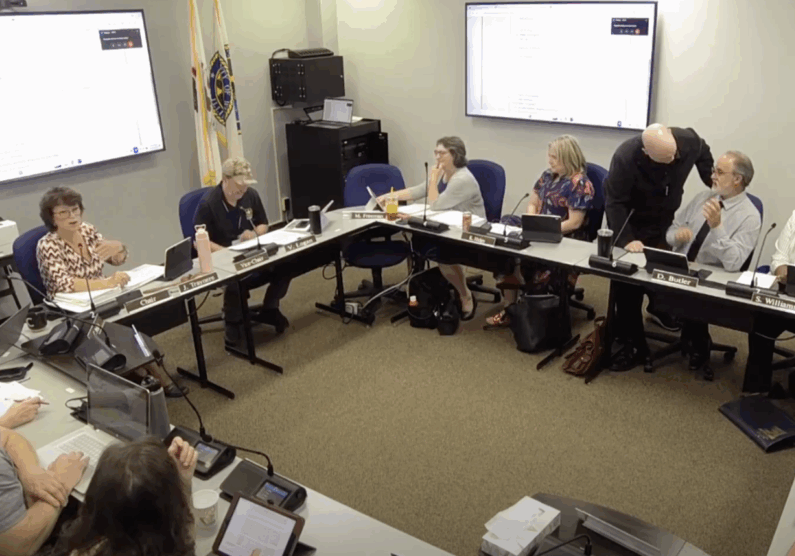
The Will County Ad-Hoc Ordinance Review Committee will draft a new, county-wide general harassment policy after a lengthy debate on Tuesday revealed the complexities of the county’s legal obligations and the limits of the County Board’s authority over other elected officials.
The discussion arose during a review of Chapter 39 of the county’s ordinances, which contains the state-mandated sexual harassment policy. Board Member Dan Butler proposed broadening the policy’s title and scope from “sexual harassment” to a general “harassment policy,” arguing the county’s required training course covers a much wider range of protected classes, including veterans and pregnant women.
“I was surprised that it included a lot of groups other than just men and women of a sexual nature,” Butler said. “I just thought our policy should reflect that… to bring a broader understanding of what we’re trying to accomplish.”
However, Phil Mock of the Will County State’s Attorney’s Office, who is guiding the committee’s review, advised against altering the existing policy. He explained that state law specifically mandates a standalone “Sexual Harassment Policy,” and changing the title could put the county out of compliance.
“The reason we use that term is because the state mandated us to use that term,” Mock said. “We don’t want to be in a situation where they said, ‘You just have a general harassment policy, you don’t have a sexual harassment policy.'”
This prompted a deeper conversation about the board’s power to set policy for the entire county. Member Judy Ogalla questioned why some ordinances apply county-wide while others do not. Mock described the county government structure as a “feudal system with a bunch of dukes and not one king,” where each elected official—like the Sheriff, County Clerk, or Coroner—maintains control over their office’s internal operations.
He clarified that the County Board’s authority is strongest on fiscal matters. Policies with direct financial implications, like those concerning insurance benefits or purchasing, are binding. Policies on workplace conditions, however, are largely followed voluntarily by other elected officials.
“As a county voice you can say that,” Mock said, suggesting a separate anti-harassment policy would likely be adopted by other officials. “My belief is all the elected officials will voluntarily follow your policy because that makes it easy on them. They don’t have to make their own up.”
Ultimately, the committee voted to direct Mock to draft a new, separate general harassment policy to be added to Chapter 39. The policy will address protections for various classes as defined by state law and court interpretations. Due to the addition of this new section and other required changes, the committee voted to postpone final approval of Chapter 39 until its next meeting.




Sunny
Latest News Stories

Everyday Economics: A stalled labor market and why the next data points matter

Assaults against ICE up 1300%, vehicular attacks up 3200%, death threats up 8000%
Bipartisan bill to cap annual deficits at 3% could curb debt growth

One year in, a ‘ho-hum’ jobs report
Five battleground governor’s races for 2026

Chicago Flips Red calls for audit after public schools report

Capital Imp Committee: Begins Drafting Policy to Regulate Artificial Intelligence in County Government

Public Health Committee Chair Demands Animal Control Agreements for Crete, Monee
Public Works Committee Considers Taking Over Kankakee County Line Road to Expedite Bridge Repairs

Trump signs order protecting Venezuelan oil revenue from legal claims
Retirements and resignations to impact midterms as balance of power at stake

U.S. Supreme Court to hear anti-oil cases with energy costs on the line

Constitutional concerns raised over Illinois’ first civil hate crime case
Peotone Man Charged With Disorderly Conduct, Criminal Damage at New Lenox Target